A musty smell in a closet, dark speckles at the bottom of a wall, or paint that bubbles near a bathroom: these are often the first signs of a leak you can’t see. Mold needs moisture to grow, so when it shows up indoors, there’s almost always a water source behind it. Cleaning the mold without finding that source means it comes back. This guide explains the warning signs, what the EPA says about cleanup, and how to find the leak that’s feeding it.
The short version
- Find and stop the water. The EPA’s first step in mold cleanup is fixing plumbing leaks and other water problems.
- Dry things fast. The EPA advises drying water-damaged areas and items within 24 to 48 hours to prevent mold growth.
- Size up the mold. Under about 10 square feet, most people can clean it themselves. More than that, or after a lot of water damage, get professional help.
Why hidden leaks and mold go together
Mold spores are everywhere, indoors and out. They only grow when they land on something that stays damp. A slow drip inside a wall, a weeping shower valve, or a pinhole in a supply line can keep drywall, wood framing, and insulation wet for weeks without any water showing on the surface. By the time you notice a smell or stain, the moisture has usually been there a while.
Common hidden sources in Whittier homes include:
- Supply lines and drains inside bathroom and kitchen walls
- Shower pans and tub drains leaking into the floor or the wall behind
- Water heater connections and relief valve lines in garages and closets
- Slab leaks wicking moisture up into carpet pad, baseboards, and the bottom of walls
- Washing machine and refrigerator ice-maker lines
Warning signs of mold from a hidden leak
- A musty, earthy smell that’s stronger in one room, closet, or cabinet, or when the HVAC first turns on.
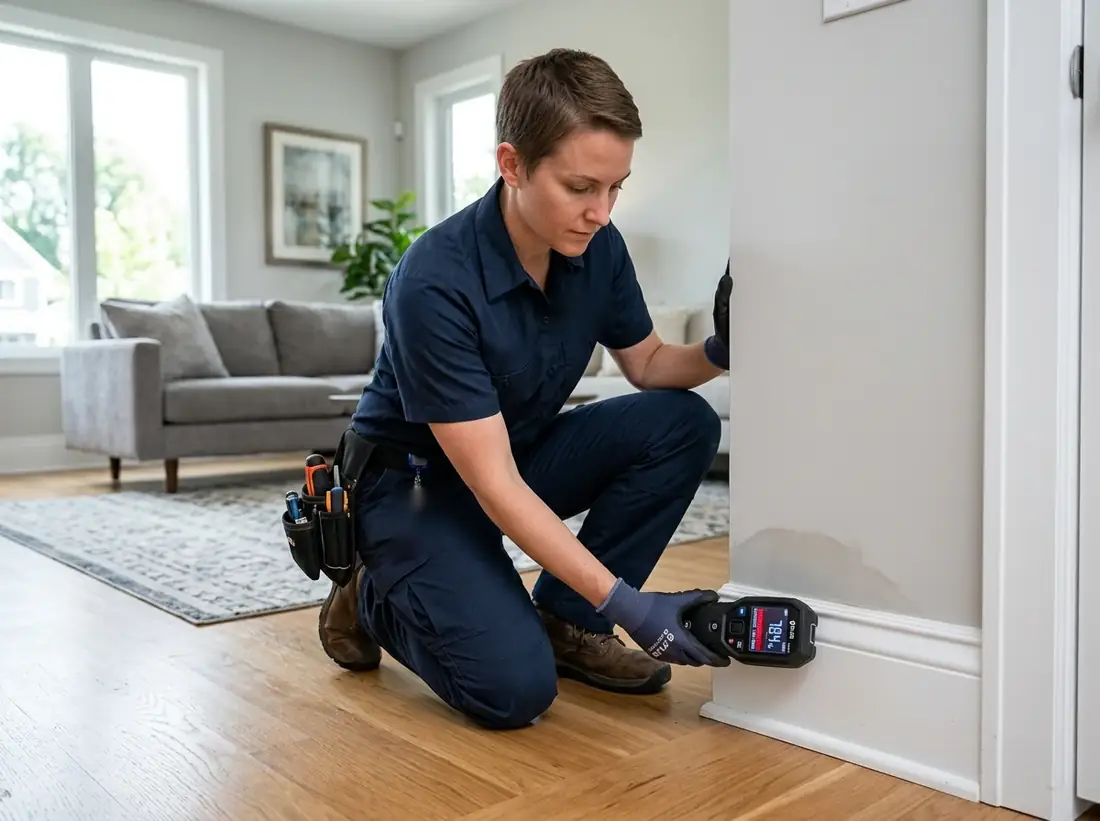
- Dark spots or speckles, often black, green, or gray, at the base of walls, behind furniture, or inside sink cabinets.
- Stains, bubbling, or peeling paint, especially in a spot that keeps coming back after it’s painted over.
- Warped baseboards, swollen trim, or soft drywall near a bathroom or kitchen.
- Loose tile or darkened grout around a shower or tub.
- Allergy-type symptoms that ease when you leave the house. The CDC notes that, for some people, mold can cause a stuffy nose, sore throat, coughing or wheezing, burning eyes, or skin rash. People with asthma or mold allergies can have more serious reactions, and people with weakened immune systems or chronic lung disease can develop lung infections.
Step 1: Find the water source
Cleaning mold without fixing the moisture is a temporary fix at best. Start with what you can check yourself:
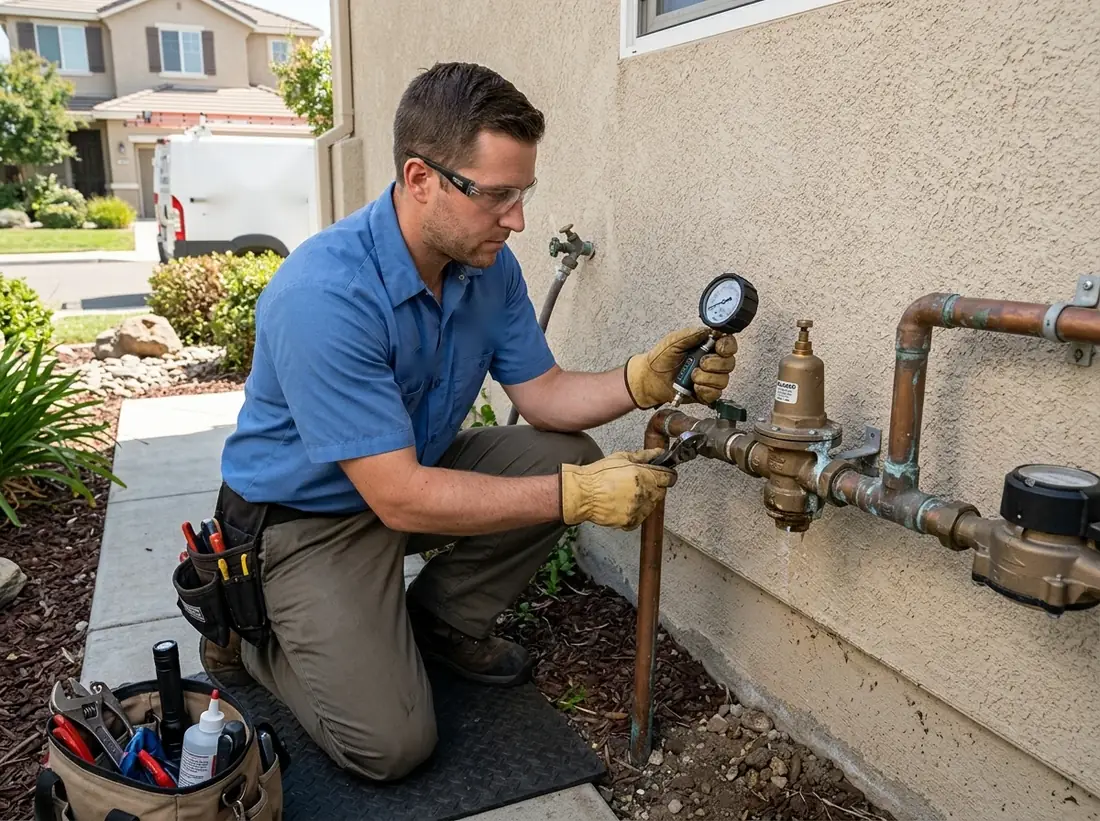
- Meter test: turn off all water and watch the leak indicator on your meter. If it moves, a supply line is leaking somewhere.
- Look above and beside the mold: water runs down and spreads along framing, so the source is often higher than the stain or on the other side of the wall.
- Check after use: mold that grows only near a shower or tub may point to a drain or shower pan leak that only leaks when the fixture is used.
- Rule out non-plumbing water: stains that appear after rain suggest the roof, windows, or exterior walls; condensation on cold pipes or poorly vented bathrooms can also feed mold.
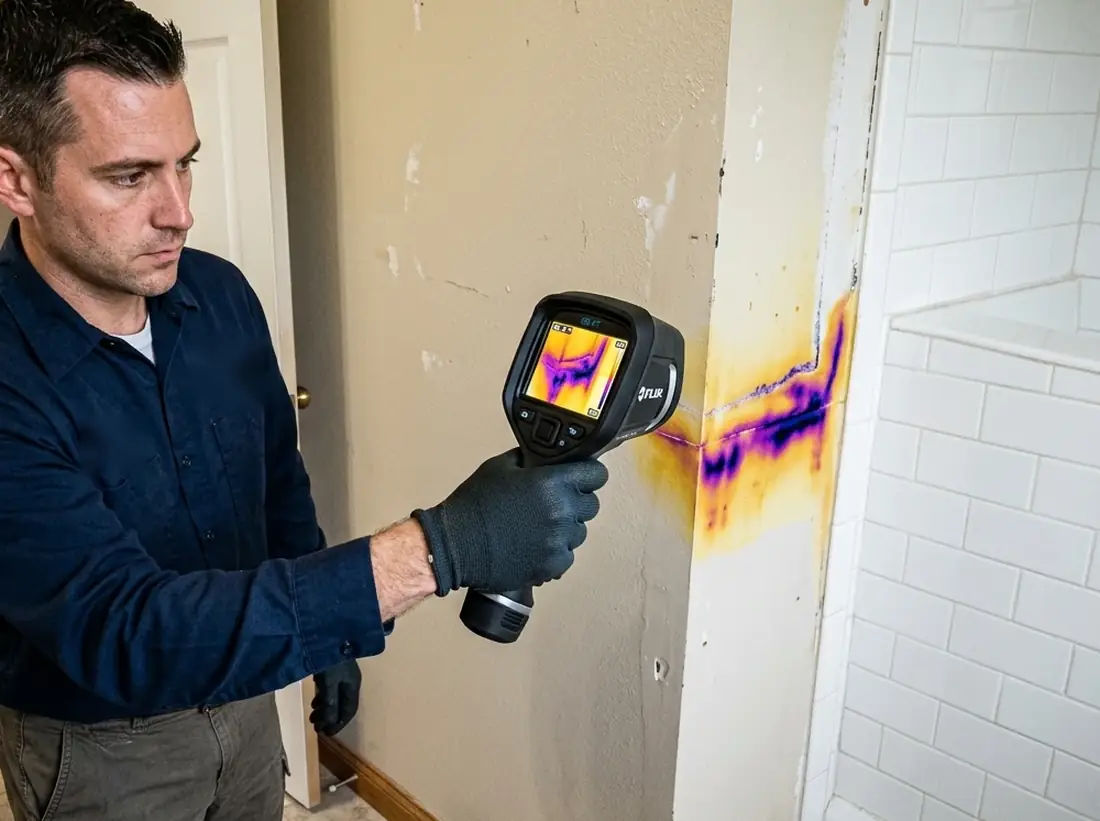
If the source isn’t obvious, hidden water leak detection can trace it without opening walls on a guess. Specialists use moisture meters, infrared thermal imaging, and acoustic equipment to map where the moisture is coming from, so the repair opening is in the right place.
Step 2: Dry it out quickly
Once the water is stopped, drying is a race against the clock. The EPA advises drying water-damaged materials within 24 to 48 hours. Open the area up to air, run fans and a dehumidifier, and pull wet items out of closets and cabinets. Carpet pad, insulation, and drywall that stayed wet a long time often can’t be saved.
Step 3: Clean up, or call for help
The EPA’s home cleanup guidance comes down to a few rules:
- Small areas (under about 10 square feet): in most cases you can handle the job yourself, using the EPA’s cleanup guidance and protective gear.
- Larger areas or a lot of water damage: get help from a contractor experienced in mold cleanup. Water from sewage or other contaminated sources also calls for a professional.
- Porous materials like ceiling tiles and carpet may have to be thrown away if they become moldy.
- Don’t paint or caulk over mold. Clean it and let the surface dry first, or it will come back through the paint.
- Don’t run the HVAC system if you know or suspect it’s contaminated with mold, since it can spread spores through the house.
Insurance and mold
Many homeowners policies treat mold differently from sudden water damage. Mold resulting from a long-term, slow leak is commonly excluded or limited. That’s one more reason to act quickly: document the damage with photos, stop the water, start drying, and call your insurer promptly. Our guide to insurance and slab leaks in California explains how sudden versus gradual damage is often handled.
Preventing mold after the repair
- Run the meter test again after any plumbing repair to confirm the leak is fixed.
- Use bathroom exhaust fans during and after showers.
- Check under sinks, behind toilets, and around the water heater every few months.
- Replace washing machine and ice-maker supply hoses that are cracked or bulging.
- Fix musty smells early. A smell is often the earliest sign of a moisture problem.
Frequently asked questions
How long after a leak does mold start to grow?
The EPA advises drying water-damaged materials within 24 to 48 hours to prevent mold growth, which is why quick action after a leak matters.
Can I just bleach the mold and paint over it?
No. The EPA says not to paint or caulk moldy surfaces. Clean the mold, fix the water source, and let the area dry completely first, or the mold will return.
Do I need a mold inspection or a leak inspection?
If you see or smell mold, the most important question is where the moisture is coming from. Leak detection finds and stops the source; mold cleanup deals with the growth. Many situations need both, in that order.
Is mold from a leak dangerous?
For some people, mold can cause stuffy nose, sore throat, coughing or wheezing, burning eyes, or skin rash, according to the CDC. People with asthma, mold allergies, weakened immune systems, or chronic lung disease can be more seriously affected.
When should I hire a mold professional?
The EPA suggests professional help when mold covers more than about 10 square feet, when there was a lot of water damage, or when the water came from sewage or another contaminated source.
Sources
Need help finding a leak?
Call to describe what you’re seeing. We’ll connect you with a Whittier leak detection pro who can pinpoint it before anything is opened up.
Call (562) 245-5818