What Is Underground Water Leak Detection?
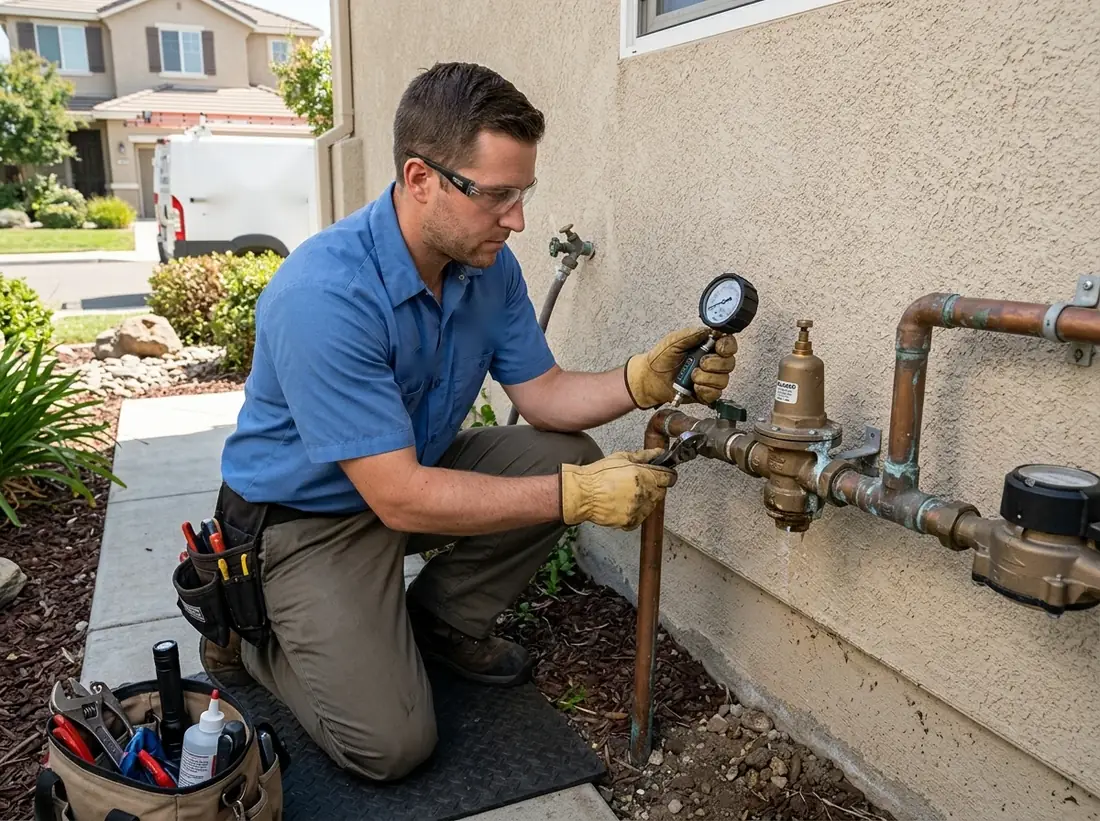
Main water service lines traveling from the municipal water meter near the street to your home's foundation run several feet underground. Shifting California clay soil, tree root intrusion, and ground settling can fracture buried PVC or copper lines, allowing thousands of gallons to escape silently into subterranean gravel beds.
Whether you manage a residential home or commercial property in Whittier, catching water loss early preserves structural integrity and halts soaring utility costs. Learn more in our complete guide to water leak detection in Whittier, CA.
Seeing these signs? Don’t wait for the damage to spread. A local pro can pinpoint the leak before anything is opened up.
Call (562) 245-5818Signs You May Need Underground Water Leak Detection
Soggy patch that never dries
A wet area in the lawn or a planter that stays damp even when irrigation is off.
Settling pavers or concrete
Walkways, pavers, or a section of driveway sinking slightly as soil washes out underneath.
A strip of greener grass
A line of unusually lush growth that follows the route of a buried pipe.
Water seeping from a crack
Moisture coming up through driveway joints or hardscape cracks on dry days.
Low pressure at outdoor fixtures
Hose bibs or a detached building getting weak flow compared with the main house.
Unexplained meter movement
The meter keeps turning with indoor fixtures and irrigation shut off.
Which buried lines are covered
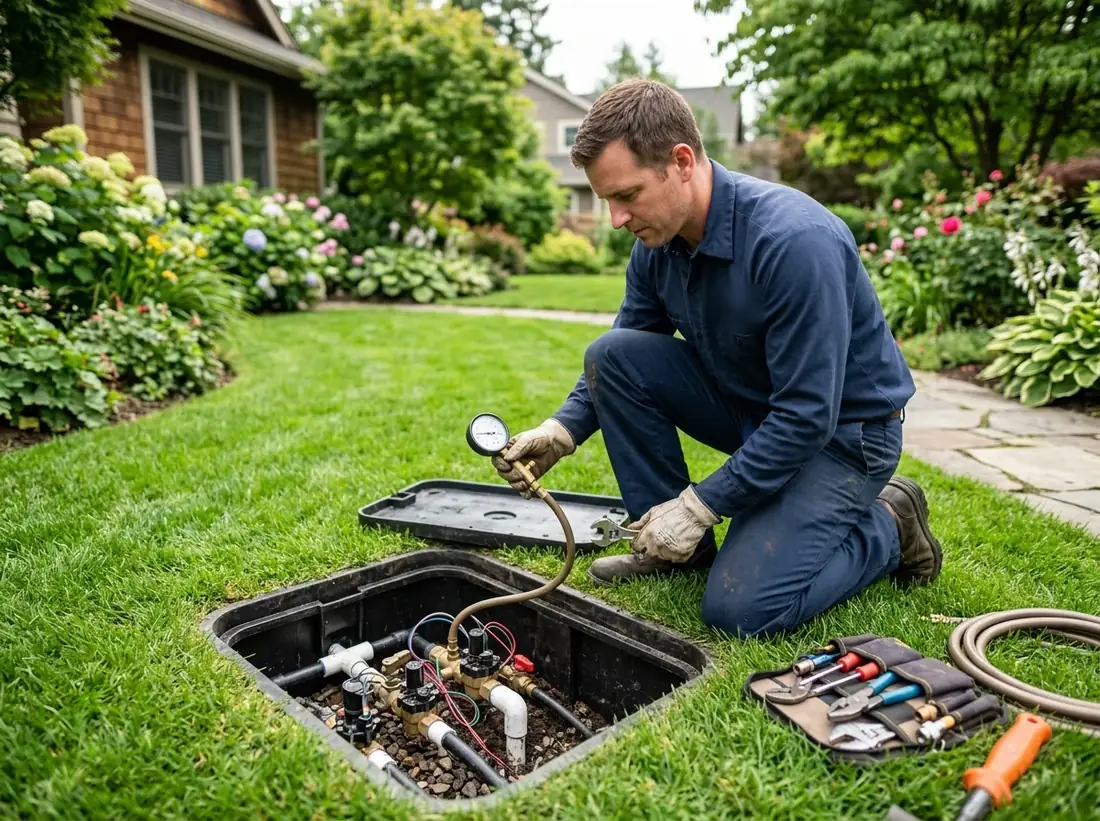
Underground leak detection covers pressurized water lines below grade anywhere on the property. Common examples include:
- Branch lines feeding exterior hose bibs, outdoor kitchens, or planters
- Supply lines to a detached garage, workshop, guest house, or accessory dwelling unit (ADU)
- Lines that pass under driveways, patios, pool decks, and walkways
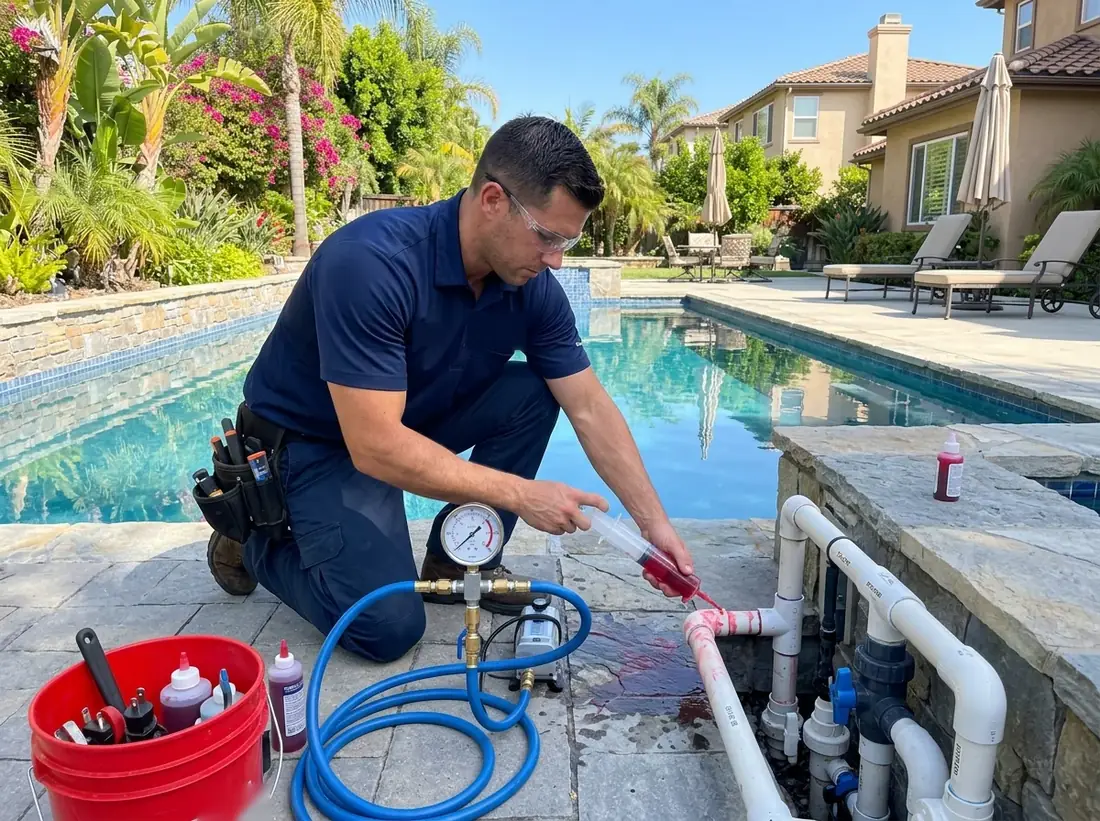
- Pool fill lines and long runs on larger residential or commercial lots
If your concern is specifically the main line between the water meter and the house, see water line leak detection. Sprinkler and drip systems have their own page: irrigation line leak detection.
Why underground leaks can hide for so long
Whether water surfaces depends on the soil, the depth of the pipe, and the slope of the lot. In sandy or well-drained soil, a leak can run for a long time and simply drain away. In denser soil, water may travel along the pipe trench and pop up several feet from the actual break. That is why the wet spot is a clue, not a location — digging where the ground is soggiest often means digging in the wrong place.
How buried leaks are pinpointed
- Confirm and isolate. Meter checks and valve isolation show whether the loss is on an underground branch and which one.
- Map the line. Metallic pipe can be traced with an electronic locator. Plastic pipe usually needs a tracer wire, a pushed sonde, or tracer gas to follow.
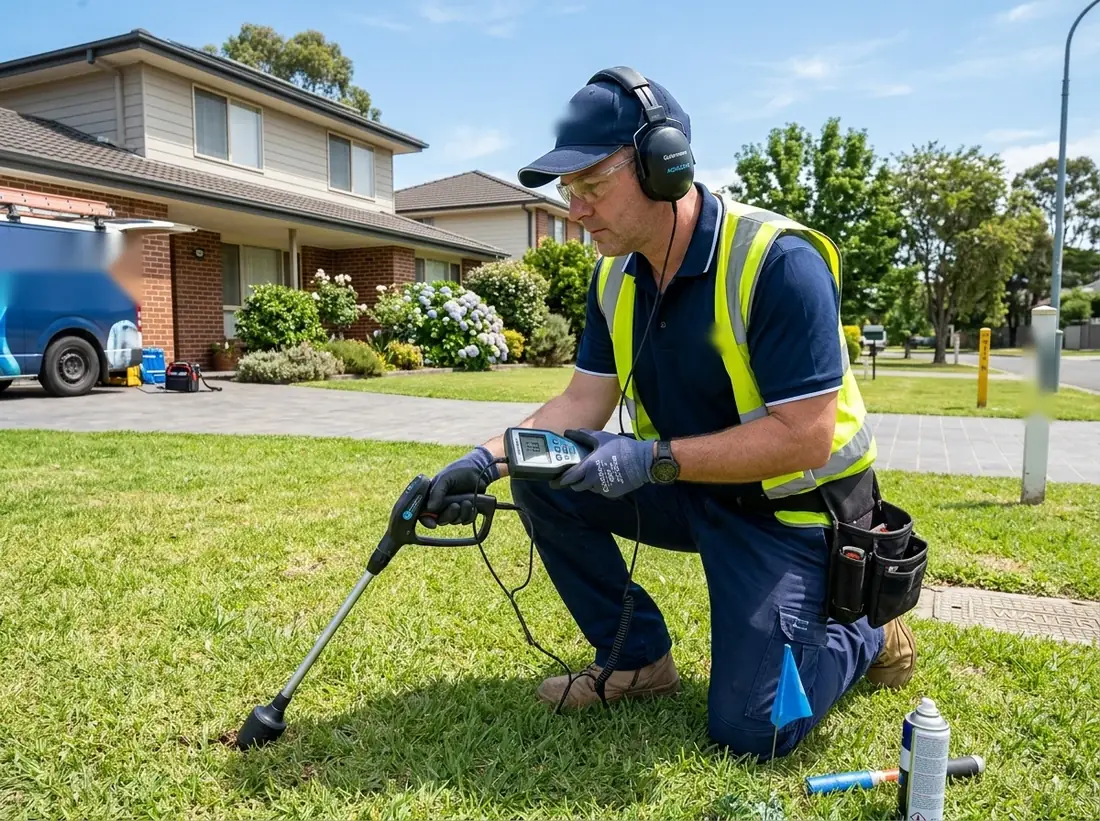
- Listen at the surface. Ground microphones pick up the sound of pressurized water escaping, compared at points along the mapped route.
- Use tracer gas when needed. A safe hydrogen-and-nitrogen mix can be introduced into a drained line; it rises through soil and concrete and is detected at the surface.
After the leak is located
Repair usually means a targeted excavation at the marked spot, or replacing a long-failing line entirely. Anyone digging on your property should contact DigAlert (811), Southern California’s underground service alert center, before excavating so gas, electric, and communication lines are marked. Ask for the repair, trench backfill, and any concrete or landscape restoration to be listed separately on the estimate.
Tools Our Specialists Use
- Ground Acoustic Microphones. Heavy-gauge acoustic sensors placed on soil, turf, and asphalt to listen to subterranean pressurized spray frequencies.
- Electromagnetic Pipe & Cable Tracers. Transmits low-frequency signals through metal lines to map the path of buried water pipes.
- Helium / Tracer Gas Detection. Non-toxic tracer gas is introduced into isolated lines and detected at ground level with hydrogen-sensitive sniffer probes.
What a Visit Usually Covers
- Valve isolation to identify which buried branch is losing water
- Line locating to map the pipe route across the yard or under hardscape
- Ground microphones and, if needed, tracer gas to pinpoint the break
- A marked location and a clear explanation before any digging
Ready to find the leak? A local pro can pinpoint the leak before anything is opened up.
Call (562) 245-5818Underground Water Leak Detection Across Whittier
We take calls for underground water leak detection in every Whittier ZIP code (90601–90610). Each neighborhood page explains the housing types and local conditions that affect how leaks show up there.
Underground Water Leak Detection FAQs
How deep can underground leak detection equipment listen?
Modern electro-acoustic listening rods and acoustic correlators can isolate pressurized leaks buried 3 to 8 feet deep depending on soil density and pipe material.
Does the homeowner own the underground water line?
In Whittier, property owners are generally responsible for the water service lateral line running from the property boundary or water meter box into the home.
Can a leak under a driveway be found without breaking concrete?
Usually the location can be narrowed down from the surface using line locating, acoustic equipment, or tracer gas. Some concrete will typically need to be opened for the repair, but accurate detection keeps that opening small.
Does my plumber need to call DigAlert?
Anyone excavating should contact 811 / DigAlert before digging so other buried utilities are marked. Confirm the contractor handles this.
Why is the wet spot so far from where they say the leak is?
Water follows the path of least resistance — often along the pipe trench or down a slope — and can surface well away from the break.