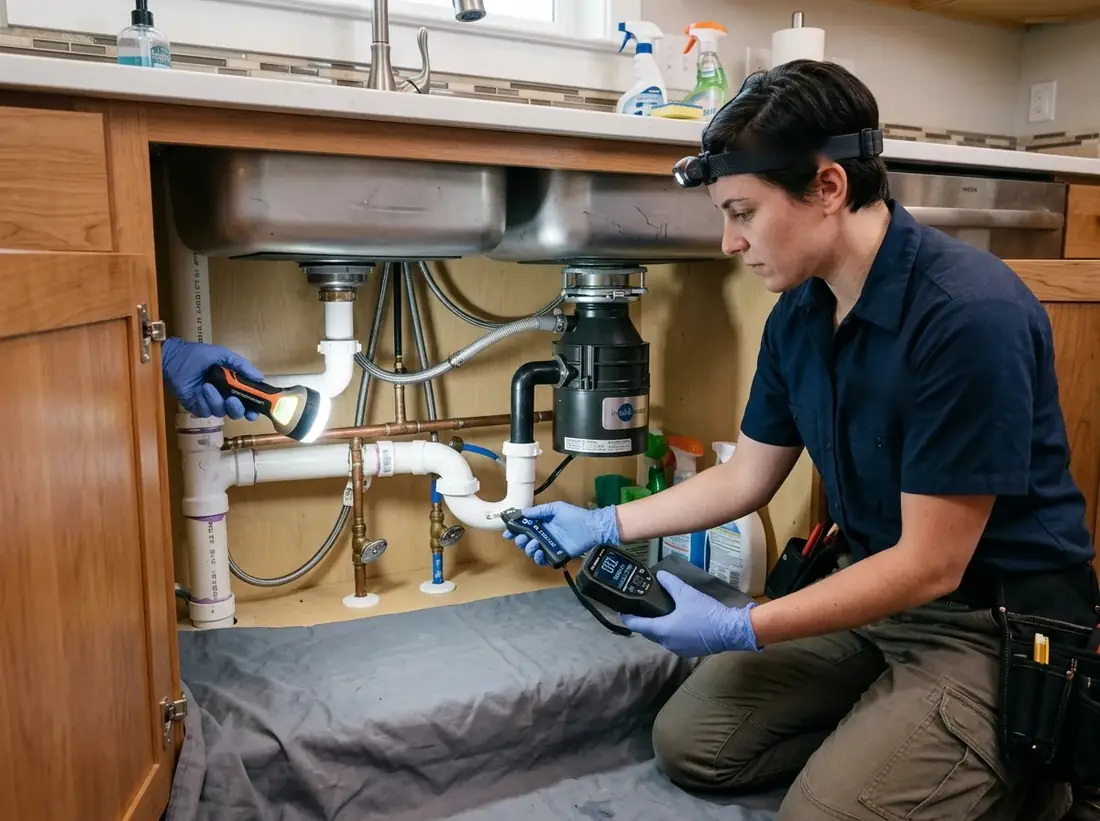
What Is Plumbing Leak Detection?
Plumbing leak detection focuses on investigating active residential and commercial plumbing systems, supply lines, shutoff valves, pressure regulators, and drainage manifolds. While some leaks are immediately visible, many occur inside cabinet bases, behind vanities, or within crawl spaces.
Whether you manage a residential home or commercial property in Whittier, catching water loss early preserves structural integrity and halts soaring utility costs. Learn more in our complete guide to water leak detection in Whittier, CA.
Seeing these signs? Don’t wait for the damage to spread. A local pro can pinpoint the leak before anything is opened up.
Call (562) 245-5818Signs You May Need Plumbing Leak Detection
Higher bill with no change in habits
Usage climbs month to month even though nothing about your routine has changed.
Toilet runs or refills on its own
You hear the tank refill when nobody has flushed — a classic sign of a leaking flapper.
Damp sink cabinets
Water stains, warping, or a musty smell under kitchen or bathroom sinks.
Puddles near appliances
Water around the water heater, washing machine, dishwasher, or refrigerator.
Dripping fixtures
Faucets, shower heads, or hose bibs that drip after being turned off firmly.
Water pressure changes
Banging pipes, pressure that seems too high, or sudden weak flow at several fixtures.
Supply leaks and drain leaks behave differently
Every home has two separate plumbing systems, and knowing which one is leaking changes the whole investigation:
- The supply side brings pressurized water in. Because it is always under pressure, a supply leak runs 24 hours a day and usually shows up on the water meter.
- The drain side carries used water out by gravity. A drain leak only happens when a fixture drains, so it won’t move the meter — but it can do just as much damage over time.
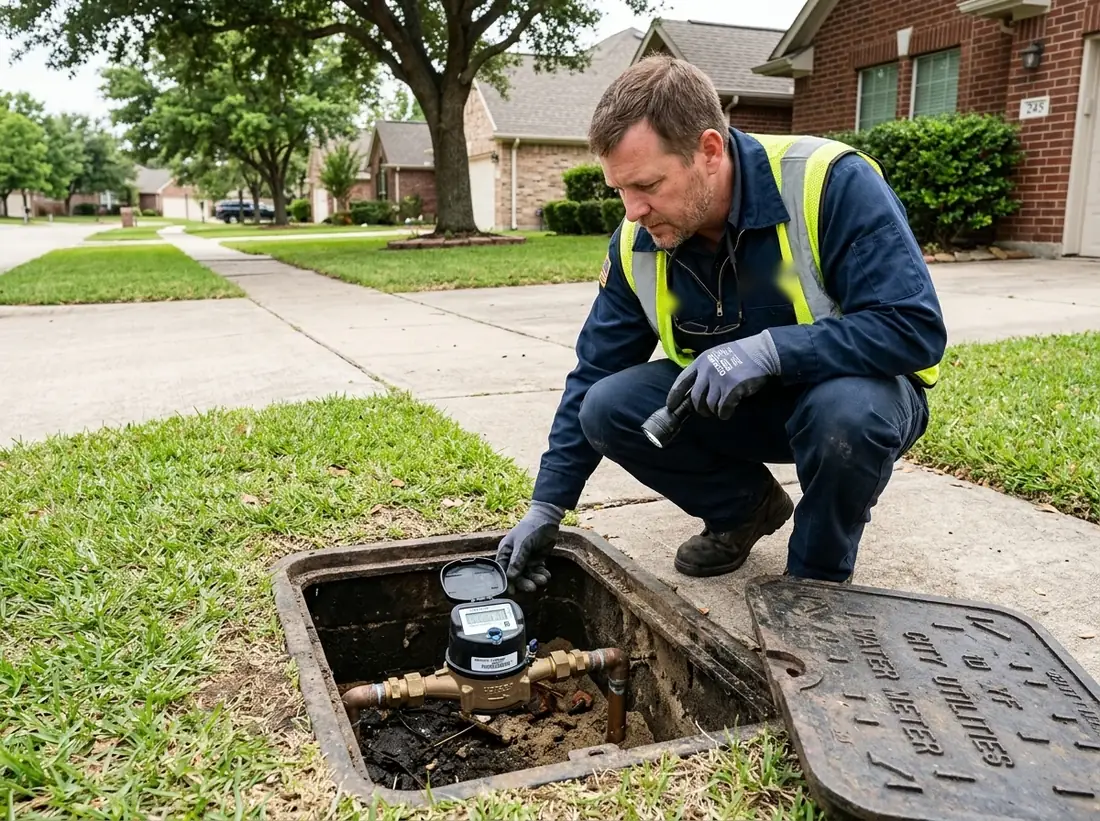
A good first step you can do yourself: turn off every fixture and appliance, then look at the meter’s leak indicator. Movement points to the supply side. No movement, but damp areas that grow after water use, points to the drain side.
Common leak points a whole-home check covers
- Toilets — worn flappers and fill valves are one of the most common sources of silent water waste. A few drops of food coloring in the tank will show up in the bowl within about 15 minutes if the flapper is leaking.
- Under-sink connections — angle stops, braided supply hoses, P-traps, and garbage disposal connections.
- Water heaters — dripping temperature-and-pressure relief valves, leaking fittings, or a corroding tank.
- Appliance lines — washing machine hoses, dishwasher supply and drain lines, and refrigerator ice-maker lines.
- Exterior fixtures — hose bibs, the pressure regulator, and the main shutoff.
- Pipes in walls and floors — when the visible fixtures check out, the search moves to concealed lines.
How the visit is structured
- Listen to what you’ve noticed. When it started, where, and whether it changes with water use.
- Test the system. Meter checks, fixture inspections, and pressure readings show whether the leak is on the supply or drain side.
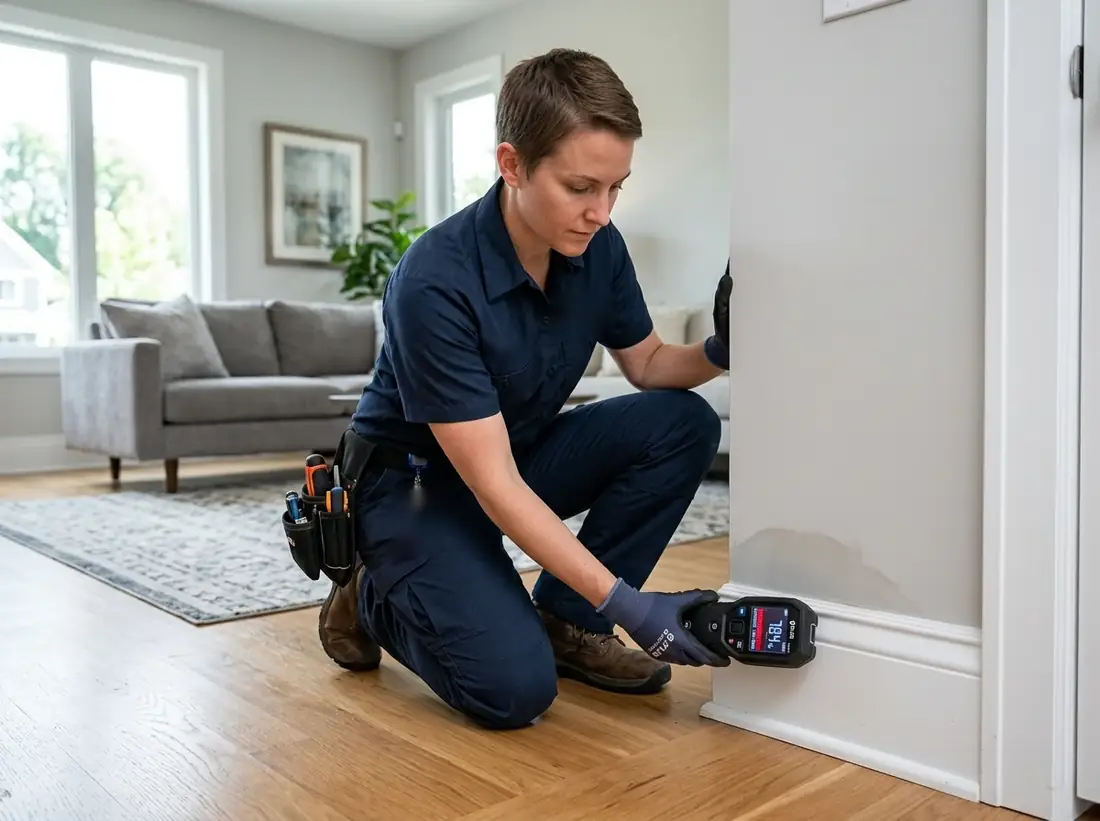
- Narrow the area. Moisture meters, thermal imaging, or acoustic equipment are used where the evidence points.
- Recommend next steps. Some fixes are simple fixture repairs; others call for a specialized follow-up such as slab or underground detection.
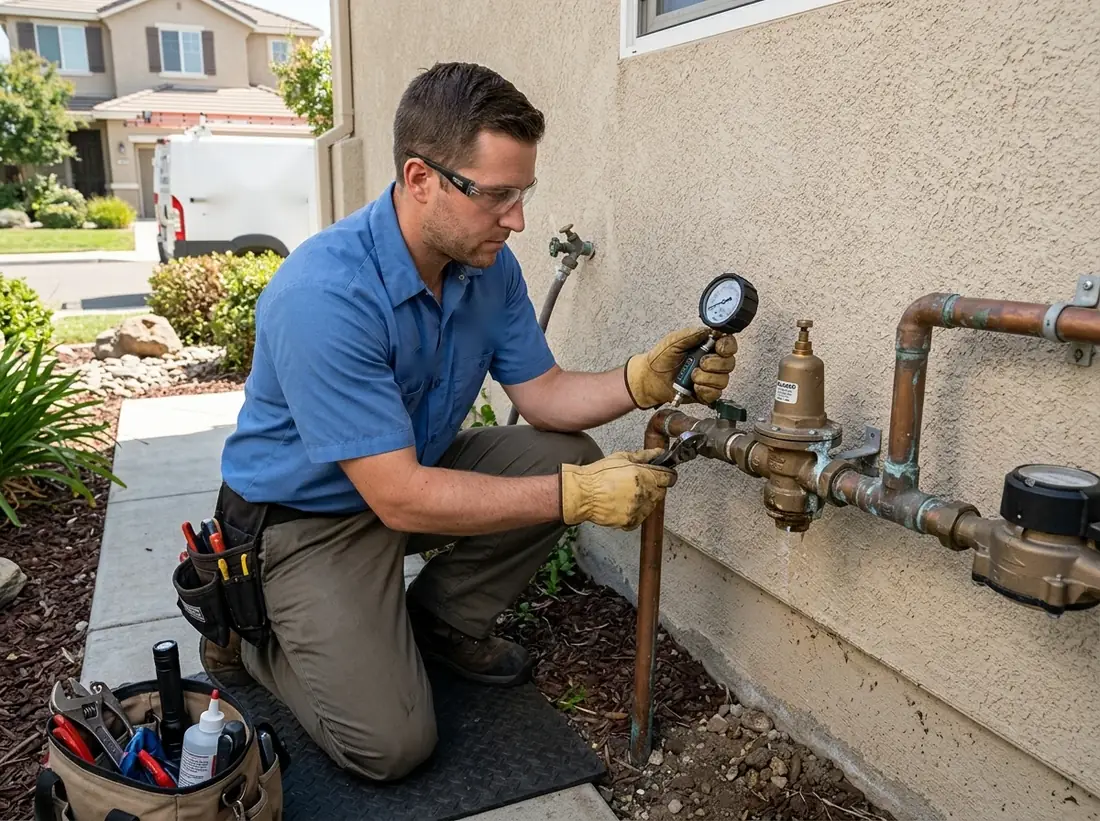
High static water pressure is also worth asking about. California’s plumbing code generally calls for a pressure regulator when street pressure exceeds 80 psi, and a failed regulator can stress fixtures and supply lines throughout a house.
Tools Our Specialists Use
- Systemic Pressure Gauge Testing. Direct static pressure monitoring to confirm whether the domestic potable supply maintains pressure.
- Fiber-Optic Borescope Inspection. High-definition micro-camera probes inserted into small openings to visually inspect plumbing cavities.
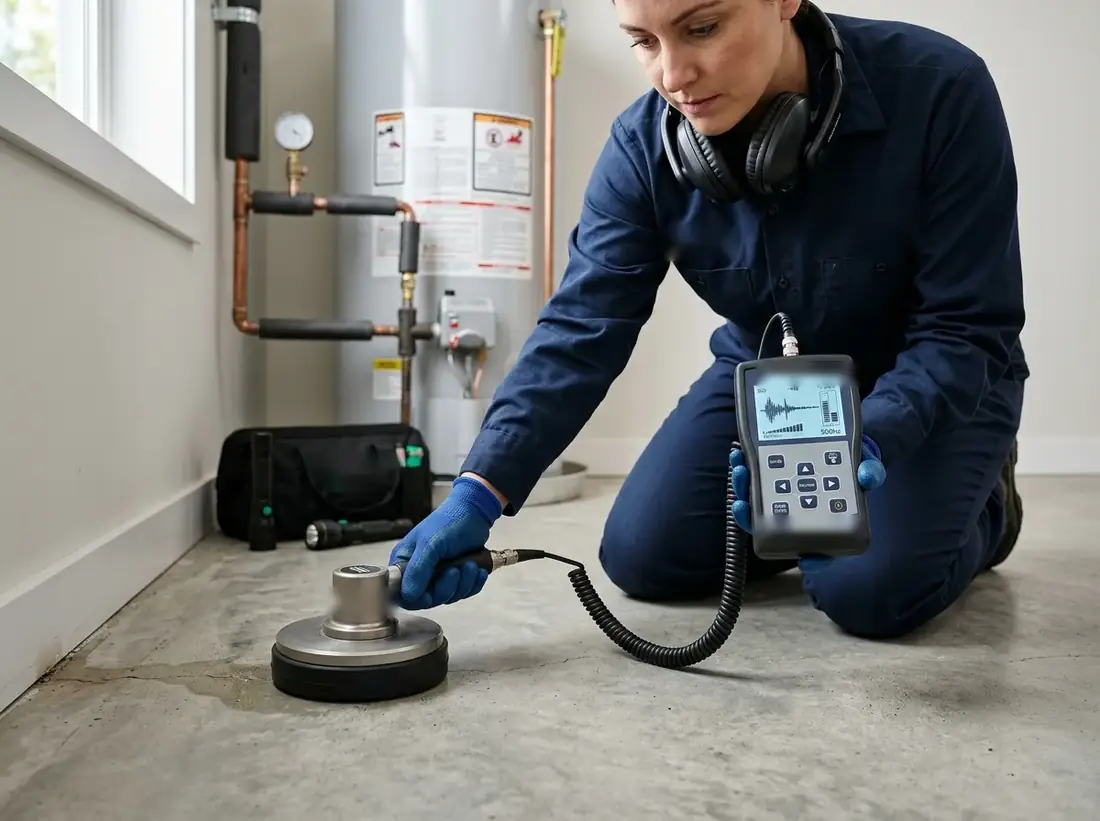
- Acoustic Contact Sensor Probes. Pinpoints whistling or hissing created by faulty cartridge valves and micro-fractures.
What a Visit Usually Covers
- Meter checks to separate supply-side and drain-side leaks
- Inspection of toilets, sink connections, the water heater, and appliance lines
- Moisture and pressure readings where the evidence points
- Clear next steps, including whether specialized follow-up is needed
Ready to find the leak? A local pro can pinpoint the leak before anything is opened up.
Call (562) 245-5818Plumbing Leak Detection Across Whittier
We take calls for plumbing leak detection in every Whittier ZIP code (90601–90610). Each neighborhood page explains the housing types and local conditions that affect how leaks show up there.
Plumbing Leak Detection FAQs
Can a leaking toilet flapper cause a high water bill?
Yes. A leaking toilet flapper or worn fill valve can waste 200 gallons or more every day without ever creating a puddle on your bathroom floor.
What is the difference between a plumbing leak and a slab leak?
A plumbing leak involves accessible fixtures, valves, and exposed lines. A slab leak specifically occurs in supply lines embedded below or within the structural concrete foundation.
I don’t know what kind of leak I have. Which service should I request?
Start here. A general plumbing leak check is designed to narrow down whether the problem is a fixture, a supply line, a drain, or something that needs specialized follow-up such as slab or underground detection.
Can minor fixes be done during the same visit?
Some providers can handle simple fixture repairs at the time of the visit. Ask when you schedule what is included and how additional work is priced.
My water heater is leaking. Does that need leak detection?
If water is coming from a fitting or the relief valve, the issue is usually visible and repairable. If the tank itself is leaking, replacement is typically the solution. Detection matters most when you can’t tell where the water is coming from.