You’ve just learned you have a leak under your concrete slab, and the first question is almost always the same: will homeowners insurance pay for this? The honest answer is that it often pays for part of the job, and the part it covers can be the most expensive part. Here’s how coverage usually breaks down in California, what to do to protect your claim, and when it may not be worth filing at all.
Quick answer
Many California homeowners policies help pay for sudden water damage and the cost to tear out and restore floors or concrete needed to reach a leaking pipe. They usually don’t pay to repair the pipe itself, and they commonly exclude damage from a leak that went on for a long time. Every policy is different, so read yours and call your insurer before repairs start.
The three parts of a slab leak claim
Adjusters generally look at a slab leak in three separate pieces. Knowing them helps you set expectations and ask the right questions.
| Part of the job | How it’s often treated | What to ask your insurer |
|---|---|---|
| Finding the leak (leak detection) | Sometimes covered when it’s needed to address covered water damage; sometimes not | “Is the leak detection visit covered under my policy?” |
| Access and restoration (breaking concrete, removing and replacing flooring) | Often covered when the leak caused sudden damage | “Does my policy pay to tear out and replace the floor to reach the pipe?” |
| The pipe repair itself | Usually excluded as wear and tear or maintenance | “Is the plumbing repair or reroute covered, or only the access?” |
Sudden damage vs. a slow, long-running leak
The biggest coverage hurdle is timing. Policies typically cover water damage that is sudden and accidental, but many exclude damage from water that leaked repeatedly or continuously over weeks, months, or years. If an adjuster sees rot, widespread mold, or long-term staining, they may argue the leak was ongoing. Acting quickly once you notice symptoms, and documenting when you discovered the problem, helps.
Matching floors: a California rule worth knowing
When a repair means replacing part of a continuous floor, homeowners worry about ending up with a patch that doesn’t match. California’s Fair Claims Settlement Practices Regulations say that when replacement items don’t match in quality, color, or size, the insurer shall replace all items in the damaged area “so as to conform to a reasonably uniform appearance” (10 CCR §2695.9). Ask your adjuster how this applies to your flooring.
Spot repair vs. reroute: how it affects your claim
There are two common ways to fix a slab leak. A spot repair opens the floor and concrete at the leak. A reroute abandons the leaking section and runs a new line through the walls or attic. Reroutes are often preferred for older copper lines or lines that have leaked before, because they avoid breaking the slab. Some insurers will put the money they would have paid for tear-out and floor restoration toward a reroute; others won’t. Ask before you choose, and get both options priced in writing.
Step by step: protecting your claim
- Stop the water. Close the main shutoff, or the cold supply to the water heater if it’s a hot-water leak. The California Department of Insurance notes that policies may not cover additional damage if you don’t take reasonable steps to prevent it.
- Document it. Photograph and video damp flooring, baseboards, and anything damaged before cleanup. Keep a log of every call and email with your insurer.
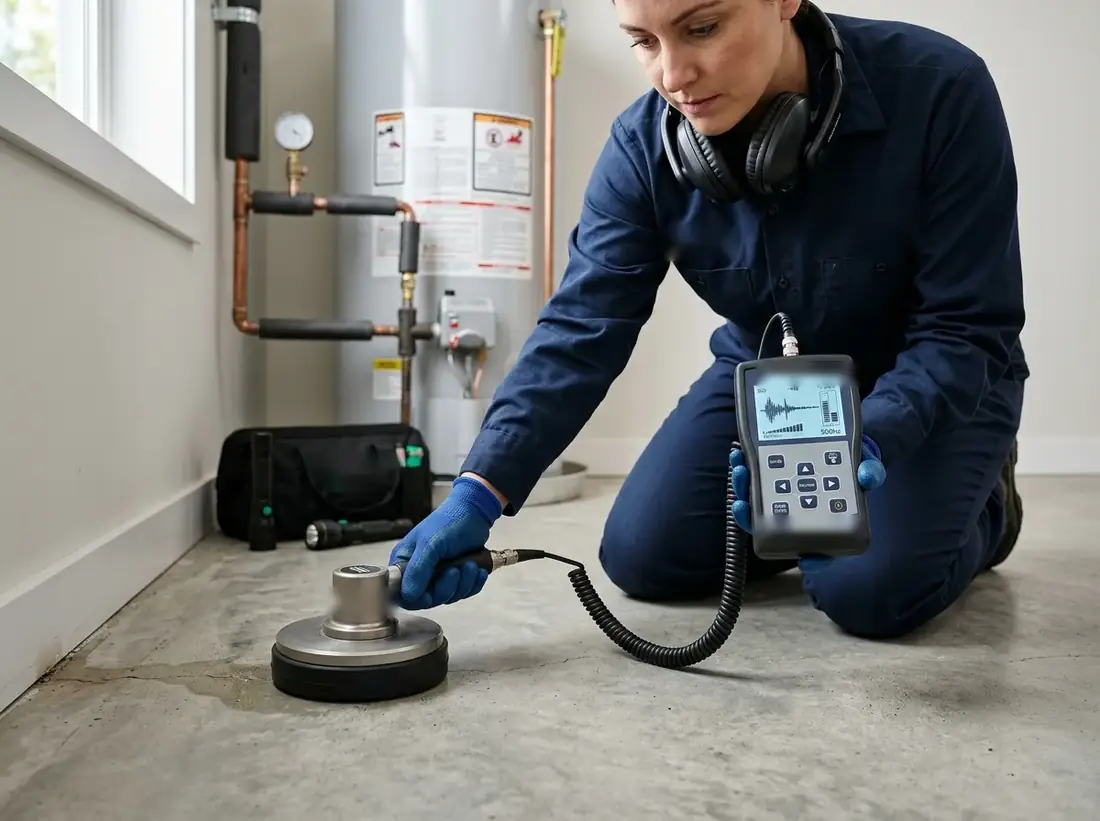
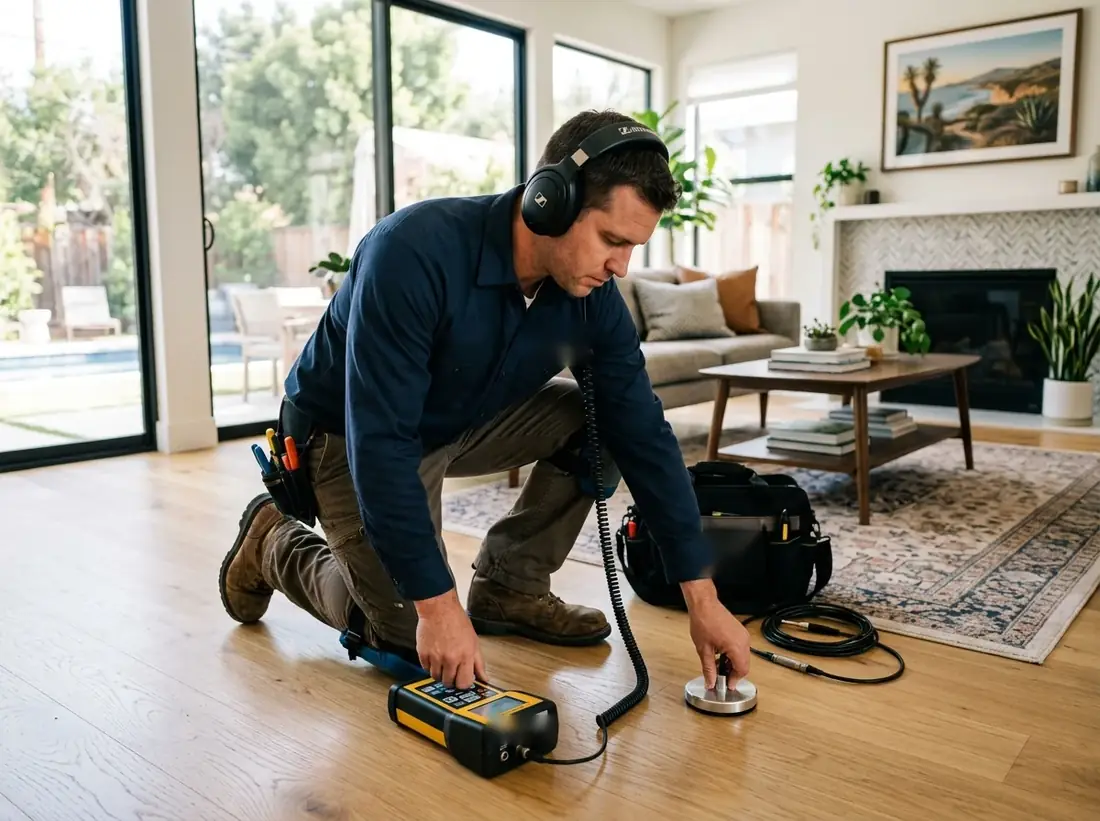
- Get the leak located. A written leak detection report showing which line is leaking and where helps your contractor and gives your adjuster something concrete to review.
- Call your insurer promptly. Report the date you discovered the problem and ask what the policy covers for detection, access, restoration, and the repair itself.
- Keep every receipt, including emergency drying, fans, and any temporary repairs.
Should you file a claim at all?
Filing isn’t always the right call. Compare your deductible with the likely cost of access and restoration. If the total repair is close to or below your deductible, a claim may not pay much, and claims history can affect future premiums or renewals. If the leak damaged flooring, cabinets, or drywall across several rooms, a claim is more likely to be worthwhile. Your agent can explain how a claim could affect your policy.
If you have a problem with your claim
If you believe your claim isn’t being handled fairly, the California Department of Insurance consumer hotline is 1-800-927-4357, and its website has a free residential property claims guide.
Frequently asked questions
Does homeowners insurance pay for slab leak detection?
Sometimes. Some policies treat leak detection as part of handling covered water damage; others don’t cover it. Ask your insurer before the visit and keep the detection report and invoice.
Will insurance pay to replace my whole floor so it matches?
California regulations require insurers to replace items in the damaged area so they conform to a reasonably uniform appearance when replacements don’t match. How far that extends depends on your floor layout and the adjuster’s assessment.
Does insurance cover the higher water bill from a leak?
Homeowners policies generally don’t reimburse water bills. Some water providers offer a one-time leak adjustment after a repair, so ask the provider named on your bill. Our high water bill guide explains how.
Can my insurer drop me for filing a claim?
Claims history can affect renewal and pricing. Ask your agent how a water claim could affect your policy before deciding whether to file.
Sources
Need help finding a leak?
Call to describe what you’re seeing. We’ll connect you with a Whittier leak detection pro who can pinpoint it before anything is opened up.
Call (562) 245-5818