What Is Water Line Leak Detection?
The main water line is the high-pressure artery that brings municipal potable water into your Whittier property. Because it is always under pressure, a break in this line can release a lot of water quickly, risking foundation undermining and severe landscape erosion.
Whether you manage a residential home or commercial property in Whittier, catching water loss early preserves structural integrity and halts soaring utility costs. Learn more in our complete guide to water leak detection in Whittier, CA.
Seeing these signs? Don’t wait for the damage to spread. A local pro can pinpoint the leak before anything is opened up.
Call (562) 245-5818Signs You May Need Water Line Leak Detection
Low pressure throughout the house
Weak flow at every fixture, not just one, especially if it changed suddenly.
Wet strip between street and house
A damp or soggy band in the front yard roughly along the path from meter to house.
Water in the meter box
Standing water in the meter box can be a leak on either side — note which side it seems to be coming from.
Hissing near the shutoff
A faint hiss or vibration at the main shutoff or where the line enters the house.
Sudden jump in the bill
A main line leak can lose a lot of water quickly compared with a dripping fixture.
Discolored water
Rusty or cloudy water can accompany corroded galvanized lines (it can also come from the water heater or city lines).
A simple test you can do first
This check tells you whether the leak is likely on the main service line or somewhere inside the house:
- Turn off every fixture, appliance, and the irrigation controller.
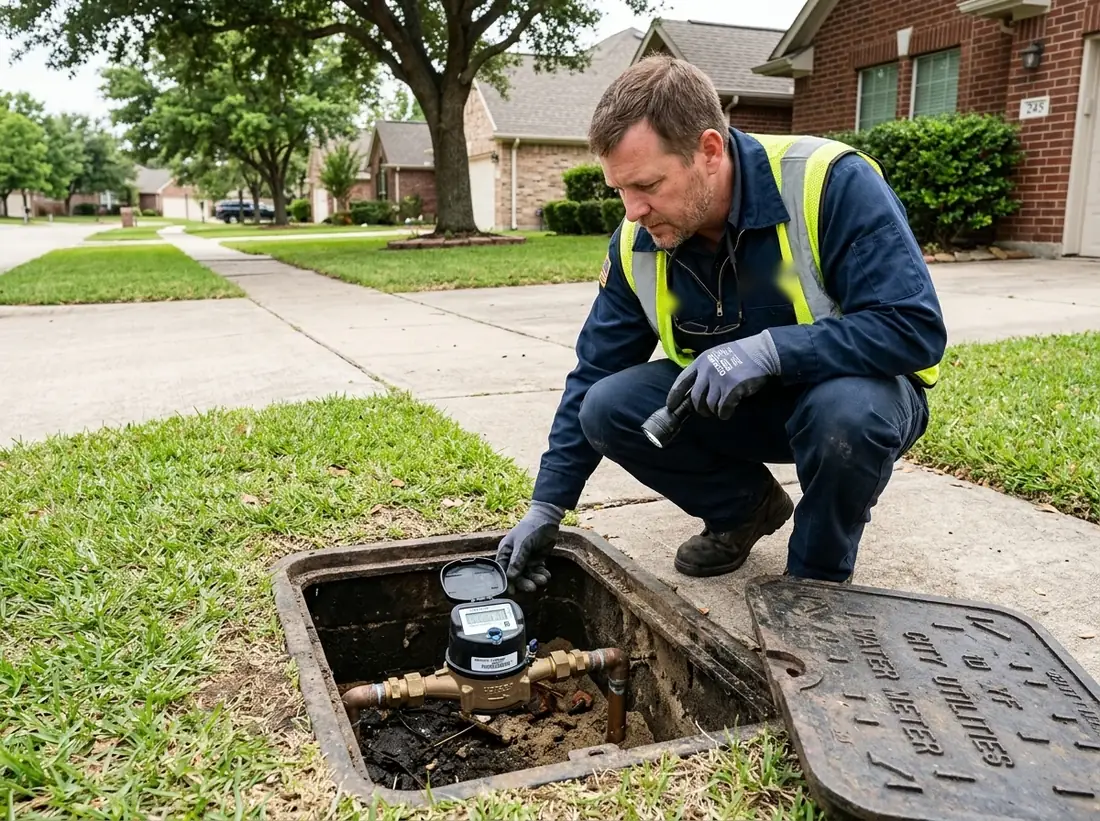
- Look at the water meter’s low-flow indicator (usually a small triangle or dial). If it is moving, you have water flowing somewhere.
- Close the main shutoff valve at the house.
- Check the meter again. If it is still moving with the house shutoff closed, the leak is most likely on the line between the meter and the house (or on an irrigation or other branch that connects before the shutoff). If it stops, the leak is inside the house.
Share the result when you call — it helps the provider plan the visit.
Who is responsible for which section
Water providers are generally responsible for the meter and the line on the street side of it. The service line from the meter to your home, and everything inside, is generally the property owner’s responsibility. If you see water bubbling up in or around the meter box itself, contact your water provider first — it may be on their side.
Why main lines fail
- Age and material. Older galvanized steel lines corrode from the inside, which both narrows the pipe (reducing pressure) and eventually causes leaks. Older copper lines can develop pinholes.
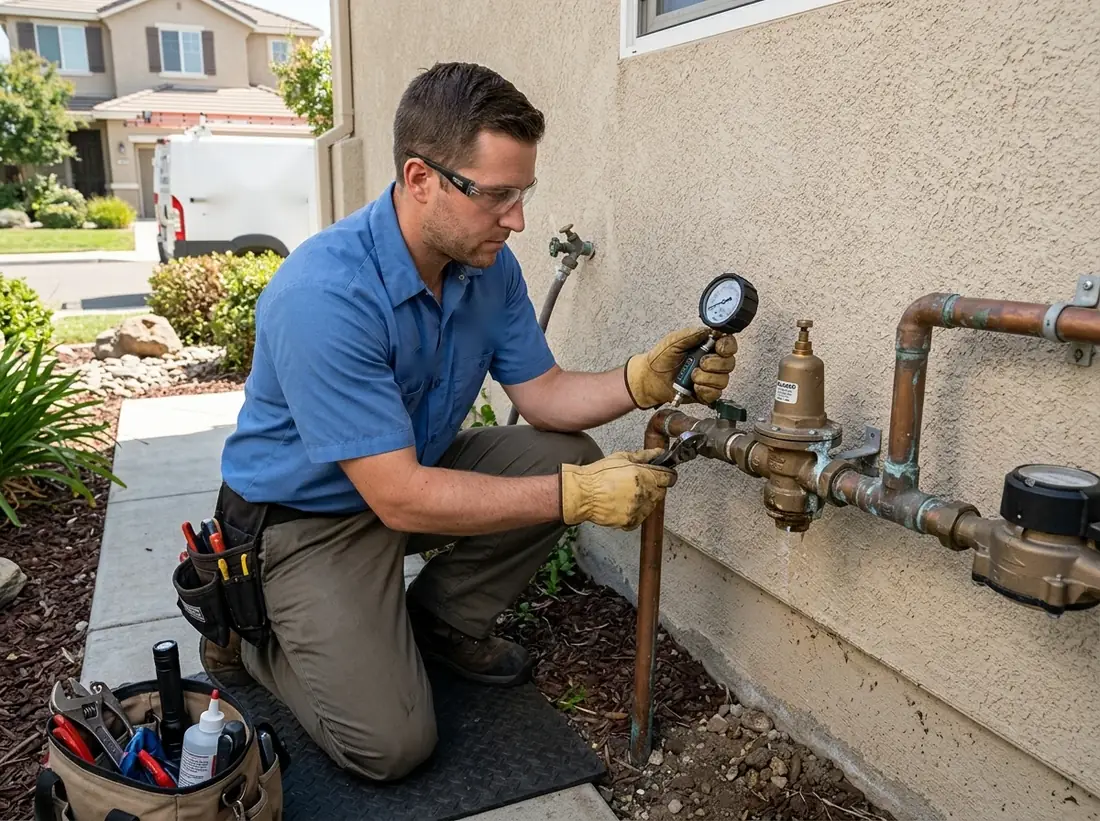
- High static pressure. Pressure that is too high stresses every fitting. California’s plumbing code generally calls for a pressure regulator when incoming pressure exceeds 80 psi; ask the provider to check yours.
- Ground movement and roots. Soil settling, nearby construction, and tree roots can stress buried lines and joints.
How the leak is located and repaired
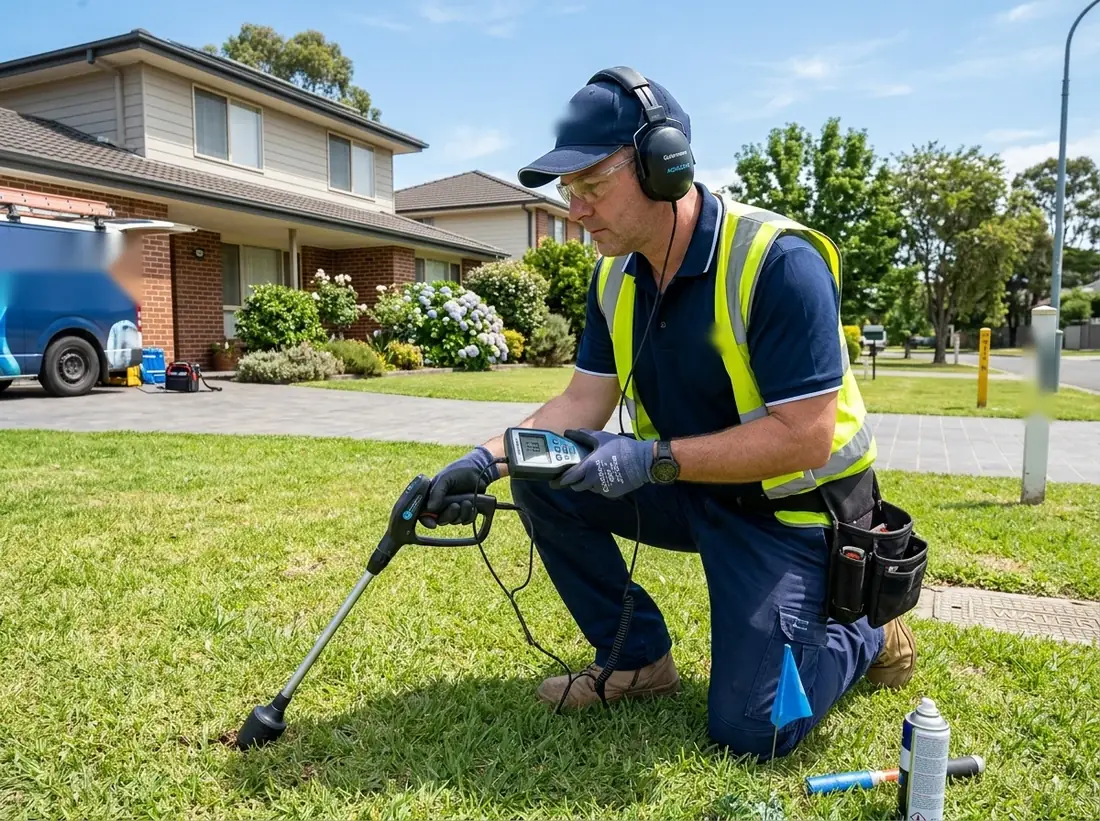
Once the test points to the service line, the provider maps the line’s route from meter to house and uses acoustic ground microphones — and tracer gas for plastic pipe or noisy sites — to pinpoint the leak. Depending on the line’s age and condition, the repair may be a targeted section repair or a full replacement of the service line. Anyone digging should contact 811 / DigAlert first.
Tools Our Specialists Use
- Static Line Pressure Decay Testing. Isolates the main line between the meter and house inlet to record rate of pressure drop.
- Sonic Frequency Resonator Testing. Analyzes acoustic sound waves traveling along metallic and non-metallic pipes under pressure.
- Digital Ground Microphones. Narrows down where the leak sound is strongest along the buried pipe route.
What a Visit Usually Covers
- A meter-and-shutoff test to confirm the leak is on the service line
- Mapping the line route from the meter to the house
- Acoustic listening and, where useful, tracer gas to pinpoint the break
- Repair-versus-replace options explained before digging
Ready to find the leak? A local pro can pinpoint the leak before anything is opened up.
Call (562) 245-5818Water Line Leak Detection Across Whittier
We take calls for water line leak detection in every Whittier ZIP code (90601–90610). Each neighborhood page explains the housing types and local conditions that affect how leaks show up there.
Water Line Leak Detection FAQs
How do I know if the leak is between the meter and my house?
Turn off your house's main shutoff valve (near the hose bib). Then check your city water meter. If the meter is still moving, the leak is located on the buried water line between the meter and your home.
Can high city water pressure damage my pipes?
Yes. Water pressure varies by street and elevation, and a pressure regulator keeps it in a safe range. If your pressure regulator fails, this excessive force stresses pipe joints, solder seams, and water heater tanks.
Will my water utility fix a leak in my front yard?
Only if it is on their side of the meter. The line from the meter to your house is generally the owner’s responsibility. Contact your water provider if water is coming from the meter box itself.
Should the line be repaired or replaced?
It depends on the pipe material, age, and whether it has leaked before. A single leak on an otherwise sound line may be repaired; an old galvanized line with low pressure is often a candidate for replacement. Ask the provider to explain both options.
How long will I be without water?
That depends on the repair. Ask the provider for a realistic estimate before work begins so you can plan around it.
Can the leak be under my driveway?
Yes — service lines often run under driveways or walkways. Accurate detection keeps the concrete opening as small as possible.