If water is leaking right now
- Shut off the water at the main valve (usually on the front wall near a hose bib, or at the meter box by the curb).
- Stay away from electricity if water is near outlets, appliances, or the breaker panel, and never stand in water to reach the panel.
- Call (562) 245-5818 to get connected with a leak detection pro who can find the source before anything is torn open.
A burst pipe, a soaked ceiling, or water spreading across the floor makes it hard to think straight. This checklist puts the steps in the order that matters most: stop the water, keep everyone safe, limit the damage, and set yourself up for a smooth repair and insurance claim. Most of it takes minutes, and you don’t need any tools for the first step.
Step 1: Shut off the water at the main valve
Stopping the water is the single most important thing you can do. Every minute a pressurized line runs, more water reaches floors, walls, and the soil under your slab.
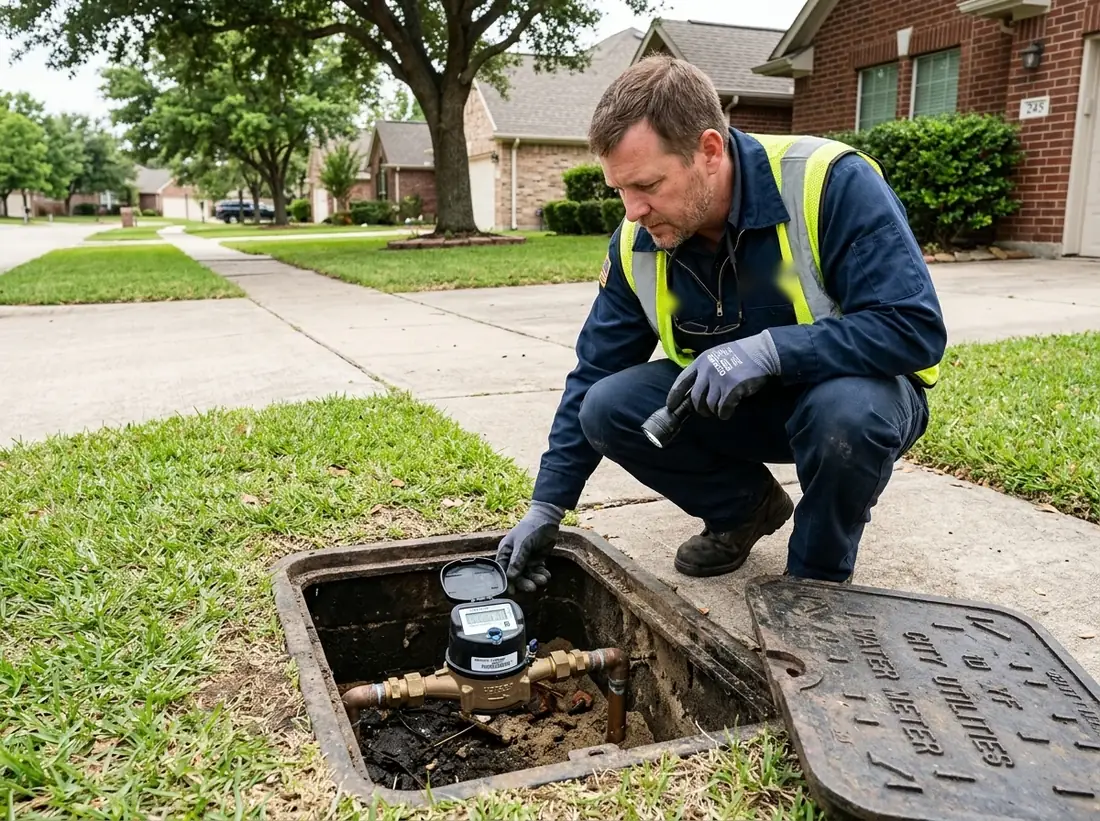
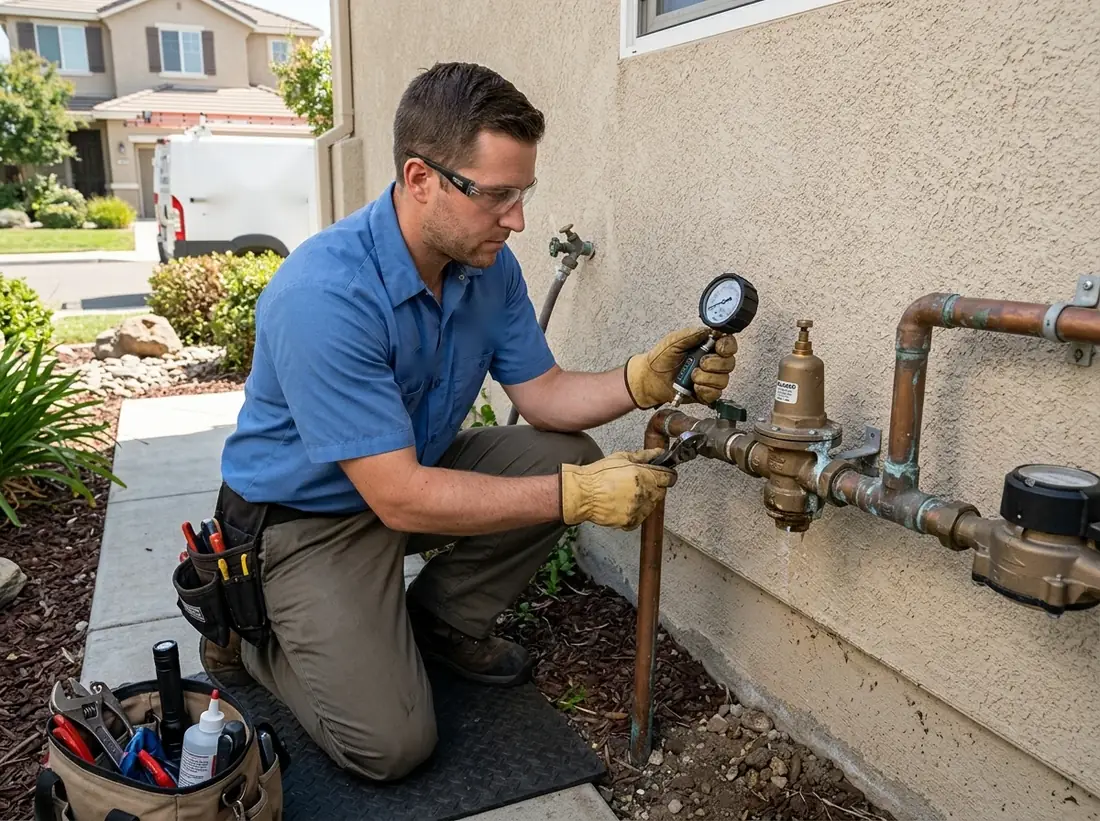
- Find the main shutoff. In many Whittier homes the main valve is on an outside wall at the front of the house, usually near a hose bib and often next to the pressure regulator, where the water line comes up out of the ground. In some homes it’s in the garage. If you can’t find it, the meter box at the curb has a shutoff too.
- Turn it the right way. A round wheel handle (gate valve) turns clockwise until it stops. A lever handle (ball valve) needs only a quarter turn, so the lever ends up crosswise to the pipe.
- Use the curb shutoff only if you must. The valve in the meter box can be stiff and may need a meter key. If it won’t move easily, don’t force it; call your water provider’s customer service line for help.
- If only one fixture is leaking, close the small valve (angle stop) under that sink or behind that toilet instead, so the rest of the house keeps water.
Step 2: Make the area safe from electricity
Water and electricity are the biggest immediate danger in a leak. The CDC’s guidance is clear: if circuits or equipment are wet or near water, turn off power at the main breaker, but do not enter standing water to reach the panel. Call an electrician instead.
- Never switch power on or off, or use an appliance, while standing in water.
- Unplug devices only if you can reach the plug while standing on a dry surface.
- Keep children and pets out of wet rooms, especially if a ceiling is sagging. A bulging, water-filled ceiling can come down.
- Before power goes back on in a wet area, have it checked by a qualified electrician.
Step 3: Deal with the water heater if it’s involved
If the leak is coming from the water heater, or you suspect a hot-water line (a warm floor is a common clue), close the cold-water supply valve on top of the water heater. For a gas heater, turn the gas control to the “pilot” or “off” position; for an electric heater, switch off its breaker if you can do so safely. Follow the instructions printed on the heater, and leave draining the tank to a professional.
Step 4: Limit the damage (this matters for insurance too)
Once the water is off, move quickly to protect your home and belongings. The California Department of Insurance notes that your policy may not cover additional damage if you don’t take reasonable steps to prevent it, so this step protects your claim as well as your floors.
- Move furniture, electronics, rugs, and documents out of the wet area. Put foil or wood blocks under furniture legs that can’t be moved.
- Mop and towel up standing water, and use a wet/dry vacuum if you have one (only where it’s electrically safe).
- Open cabinet doors and windows, and run fans to start drying.
- Put a bucket under ceiling drips. If a ceiling is bulging, don’t poke it yourself; keep people away and get help.
Watch the clock on drying. The U.S. EPA advises drying water-damaged areas and items within 24 to 48 hours to prevent mold growth. Carpet pad, drywall, and insulation that stay wet longer often have to be removed. If a large area is soaked, a water damage restoration company with professional drying equipment may be worth calling the same day.
Step 5: Document everything before cleanup and repairs
- Take photos and video of the water, the damage, and the source if you can see it, before anything is thrown away or repaired.
- Write down when you noticed the leak, when you shut off the water, and who you called. The Department of Insurance recommends keeping a log of calls and correspondence.
- Keep receipts for anything you buy or pay for to stop the damage, such as fans, tarps, and emergency service calls.
- Hold on to damaged items until your insurer says you can dispose of them.
If you plan to file a claim, report it to your insurer promptly. Our guide to slab leaks and homeowners insurance in California explains what’s commonly covered and what usually isn’t.
Step 6: Find the source before anything gets torn open
Some leaks are obvious, like a split supply hose under a sink. Many aren’t. If water is coming up through the floor, down a wall, or out of the ground, the actual leak may be several feet from where you see water. That’s exactly when guessing gets expensive: opening the wrong section of floor or wall means more damage and more repair.
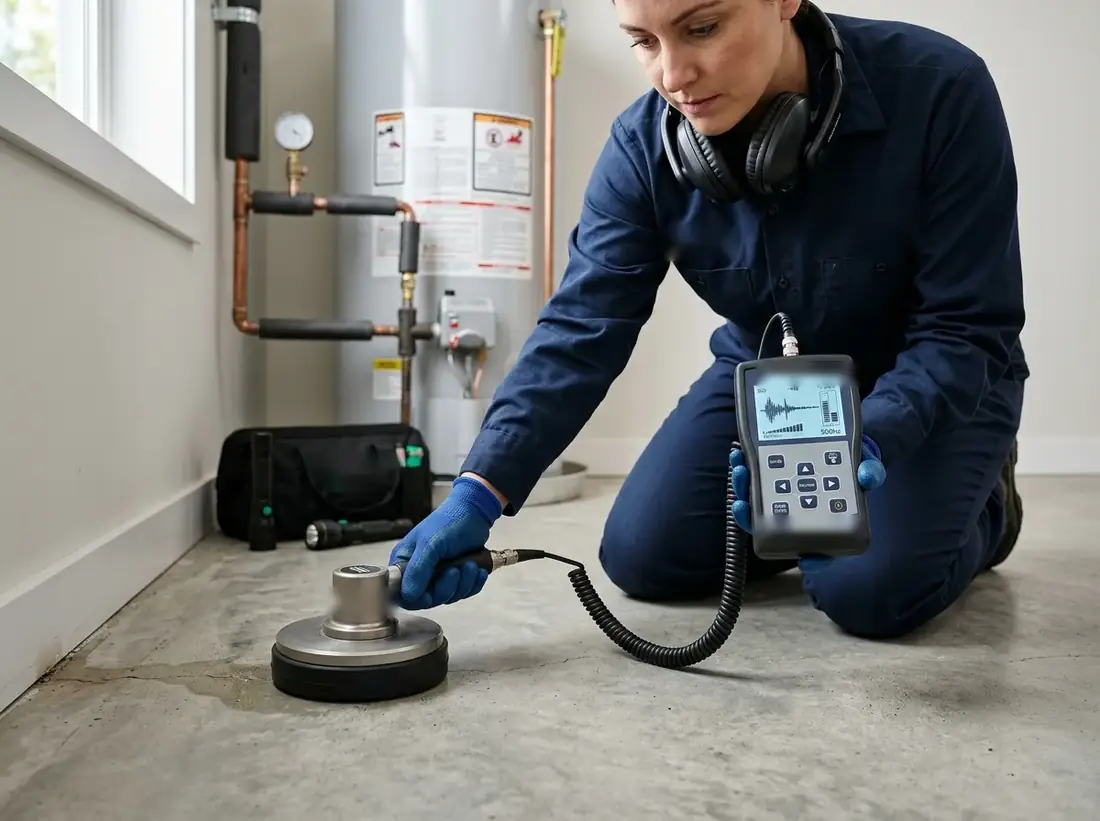
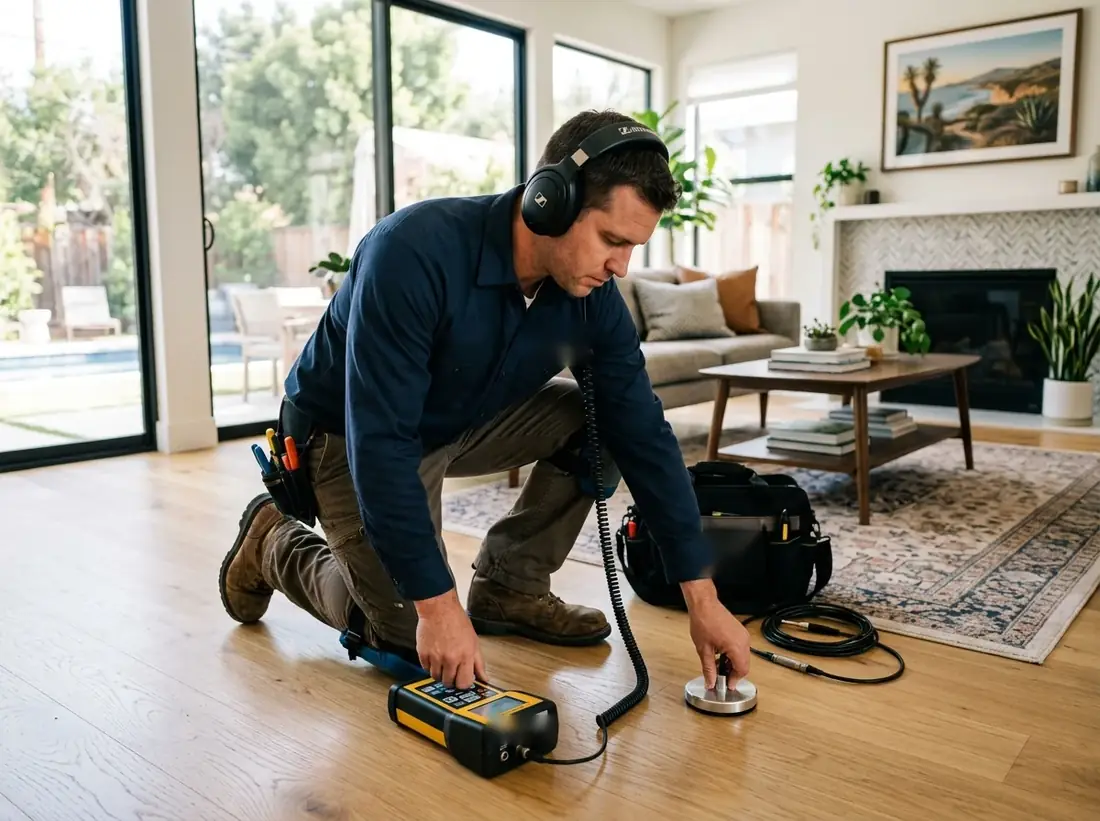
A leak detection specialist confirms which line is leaking with meter and pressure tests, maps where the pipes run, and then narrows down the location with acoustic listening equipment, thermal imaging, or tracer gas, so the repair opening is small and in the right place.
| What you’re seeing | Most likely source | Where to start |
|---|---|---|
| Water coming up through tile or carpet, or a warm spot on the floor | Supply line under the slab | Slab leak detection |
| Stain spreading on a ceiling or wall | Supply line, drain, or shower pan inside the wall | Hidden leak detection |
| Water bubbling up in the yard or a soggy strip by the walkway | Main line from the meter to the house | Water line leak detection |
| Water pooling around the water heater, sink, or appliance | Fixture, connection, or appliance line | Plumbing leak detection |
| Sprinkler area flooding or water running to the street | Irrigation mainline or valve | Irrigation leak detection |
Step 7: Know when it’s not a plumbing leak
A stain that appears only after rain usually points to the roof, windows, or exterior walls rather than plumbing. Water near the water heater can be condensation or a dripping relief valve. If the main valve is off and water keeps coming, check whether it’s from a neighboring unit (in condos and townhomes) or from outside drainage. If you’re not sure, the water meter can tell you: with every fixture off and the main valve open, a moving leak indicator means water is flowing somewhere in your plumbing.
Frequently asked questions
Where is the main water shutoff in most Whittier houses?
Usually on an outside wall at the front of the house where the water line comes up from the ground, often beside the pressure regulator and a hose bib. Some homes have it in the garage. The curb meter box also has a shutoff that can be used if the house valve can’t be found.
Should I turn off the water heater during a leak?
If the leak involves the water heater or a hot-water line, close the cold supply valve on top of the heater and set a gas heater to pilot or off (or switch off the breaker for an electric heater, if it’s safe to reach). Follow the instructions on the heater’s label.
How fast does mold grow after a leak?
The EPA recommends drying water-damaged materials within 24 to 48 hours to prevent mold growth. Wet carpet pad, insulation, and drywall that can’t be dried quickly often need to be removed.
Will insurance pay for a leak?
Many policies cover sudden water damage and the cost of accessing a leaking pipe, but often not the pipe repair itself or damage from a slow leak that went on for a long time. Coverage varies, so read your policy and call your insurer. The California Department of Insurance consumer hotline is 1-800-927-4357.
The water is off. Do I still need leak detection?
If you can see the leak and it’s a simple fixture or hose, a plumber can repair it directly. If water came through a floor, wall, ceiling, or the ground, finding the exact source first keeps the repair opening small and avoids tearing up the wrong area.
Sources
Need help finding a leak?
Call to describe what you’re seeing. We’ll connect you with a Whittier leak detection pro who can pinpoint it before anything is opened up.
Call (562) 245-5818