What Is Acoustic Leak Detection?
When water escapes from a pipe under pressure, it generates distinct acoustic frequencies through the pipe wall and surrounding substrate. Acoustic leak detection uses sensitive electro-acoustic sensors, frequency filters, and noise-canceling headphones to pick out that sound from background ambient noise.
Whether you manage a residential home or commercial property in Whittier, catching water loss early preserves structural integrity and halts soaring utility costs. Learn more in our complete guide to water leak detection in Whittier, CA.
Seeing these signs? Don’t wait for the damage to spread. A local pro can pinpoint the leak before anything is opened up.
Call (562) 245-5818Signs You May Need Acoustic Leak Detection
Sound of running water
You can hear water moving inside a wall, under a floor, or near the foundation when nothing is on.
Confirmed leak, unknown location
A meter or pressure test shows a leak but nothing is visible.
Leak under hard surfaces
The suspected line runs under tile, concrete, or a driveway you don’t want opened blindly.
Pressurized supply line involved
Acoustic testing is most effective on lines that are always under pressure.
How acoustic leak detection works
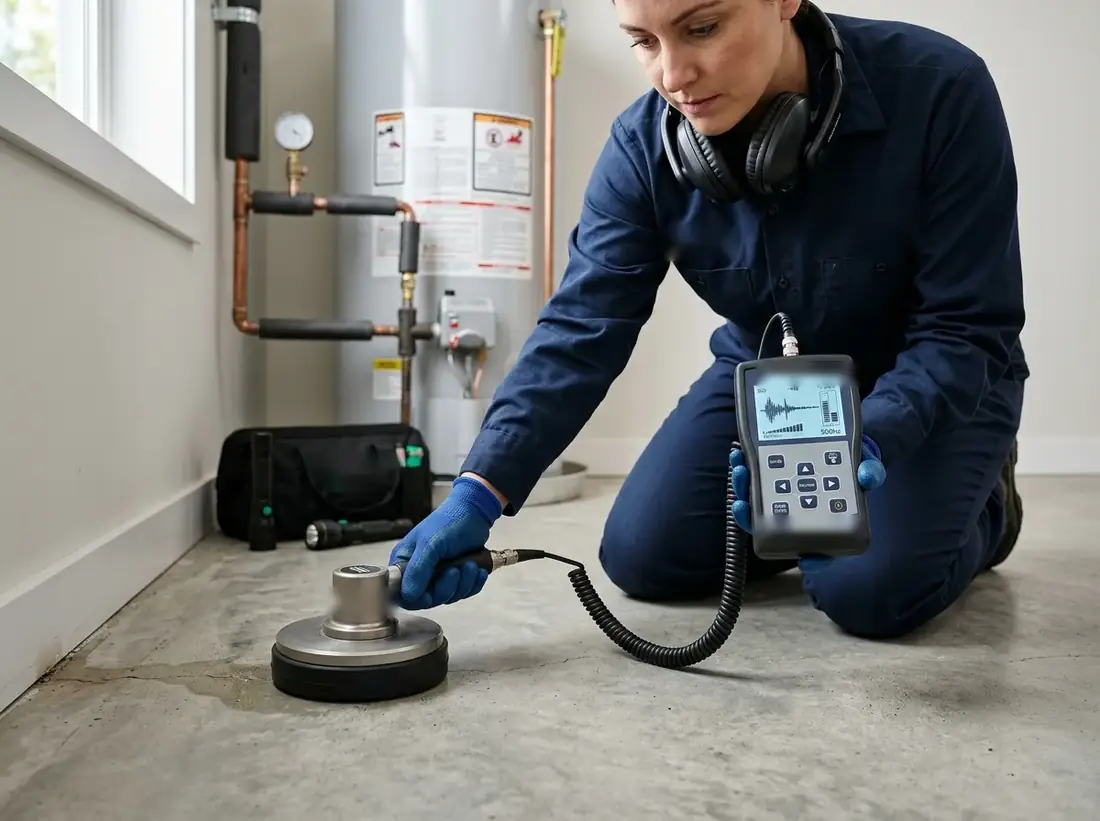
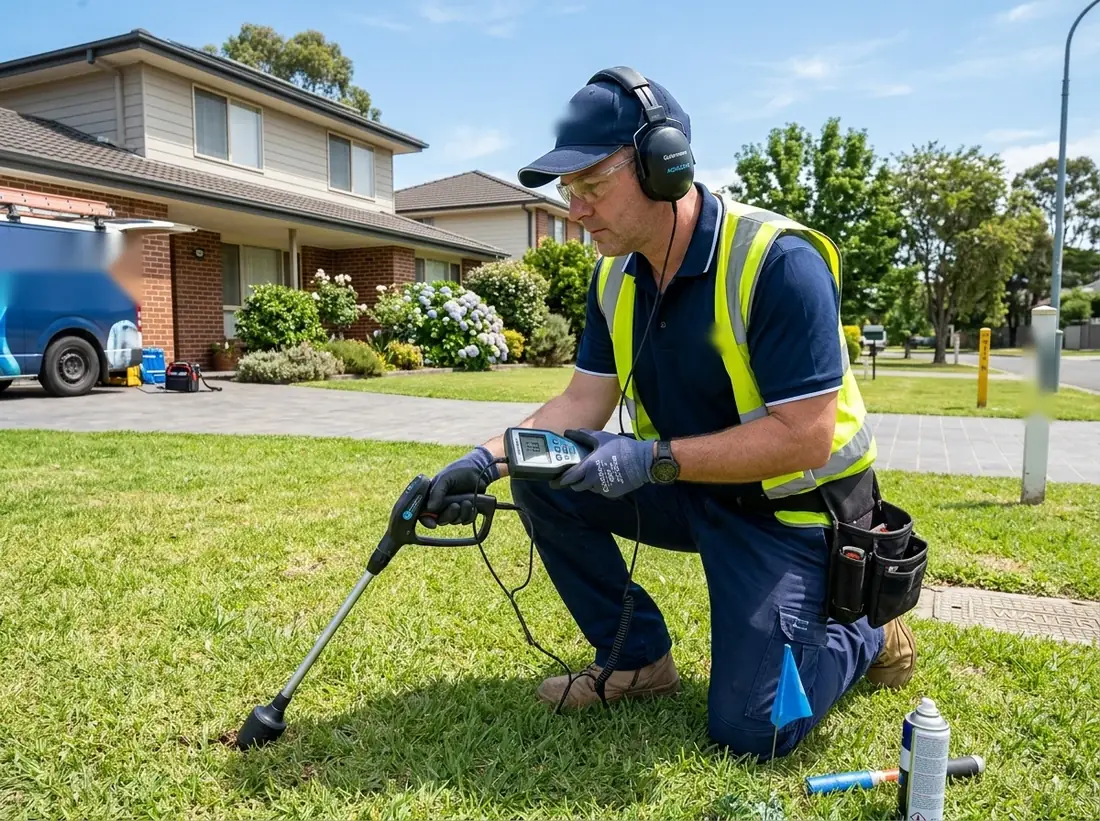
A technician uses ground microphones and contact sensors connected to an amplifier with adjustable filters. The filters screen out background noise so the frequencies typical of escaping water stand out. Readings are taken at points along the mapped pipe route and compared; the sound is usually loudest closest to the leak.
Contact sensors can also be placed on accessible points — hose bibs, valves, and fixture connections — to listen to the pipe itself. On longer pipe runs, some providers use correlators, which compare the sound reaching two sensors to calculate where the leak sits between them.
Where it works best — and where it doesn’t
Acoustic detection is a strong tool, but it is not magic. Being upfront about its limits helps you understand the findings:
- Works best on pressurized lines. Supply lines under normal pressure produce the clearest sound. Drain lines generally aren’t pressurized and are better inspected with a sewer camera.
- Pipe material matters. Metal pipe carries sound well. Plastic pipe such as PEX or PVC dampens it, so other methods like tracer gas may be needed.
- Depth and soil affect the signal. Deeper pipes, loose fill, and thick slabs weaken what reaches the surface.
- Background noise is the enemy. Traffic, air conditioners, pool pumps, and running appliances can mask a leak. You may be asked to turn equipment off during testing.
How it fits with other methods
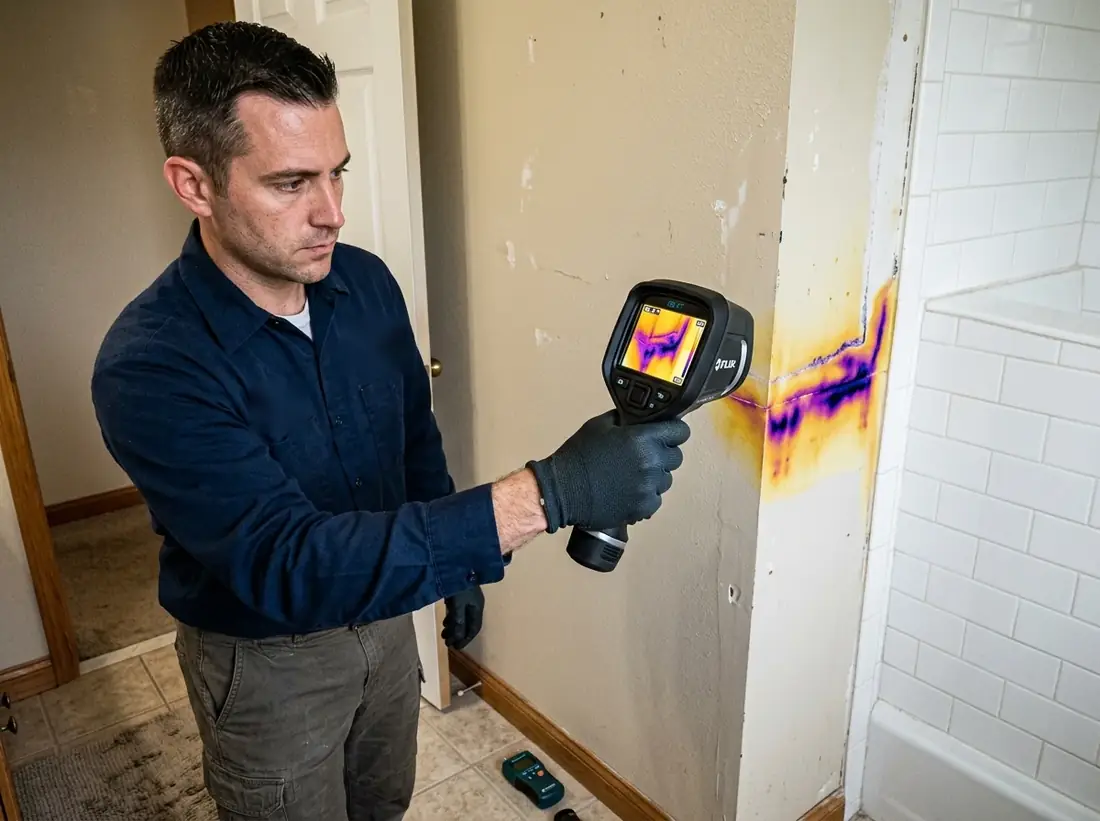
Acoustic listening is usually one step in a sequence. Meter and pressure tests confirm that a leak exists and which line is involved; line locating maps the pipe route; acoustic equipment narrows the location along that route; and thermal imaging or tracer gas can confirm it. A result from two methods that agree is more reliable than one reading alone.
How to prepare for testing
- Plan for the water to stay off at the fixtures during testing and for a quieter house — no laundry, dishwasher, or irrigation.
- If you can, turn off pool pumps, fountains, and noisy equipment near the suspected area.
- Clear access to the floor area or yard along the likely pipe route.
Tools Our Specialists Use
- Electro-Acoustic Ground Mics. Heavy chrome ground disc sensors placed at regular grid intervals to measure sound decibel intensity.
- Multi-Frequency Filter Amplifiers. Adjusts frequency bands (30 Hz to 3000 Hz) to eliminate wind, traffic, and refrigerator hum while boosting leak audio.
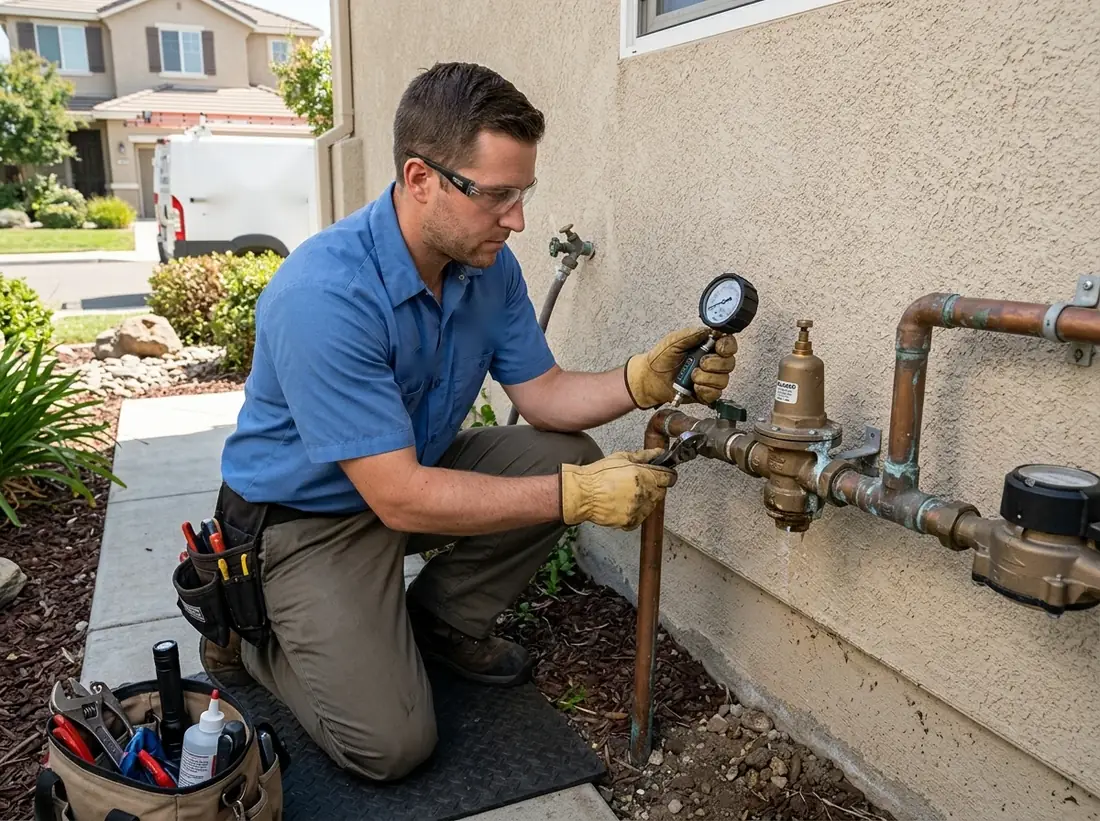
- Direct-Contact Sonic Listening Rods. Direct metal-to-metal probes touched against hose bibs, angle stops, and meter fittings to narrow the acoustic search area.
What a Visit Usually Covers
- Meter or pressure checks to confirm which line is leaking
- Mapping the pipe route so listening follows the pipe
- Ground microphone and contact-sensor readings compared along the route
- Confirmation with a second method where practical
Ready to find the leak? A local pro can pinpoint the leak before anything is opened up.
Call (562) 245-5818Acoustic Leak Detection Across Whittier
We take calls for acoustic leak detection in every Whittier ZIP code (90601–90610). Each neighborhood page explains the housing types and local conditions that affect how leaks show up there.
Acoustic Leak Detection FAQs
Can acoustic detection hear through thick concrete?
Yes. High-frequency acoustic vibrations transmit effectively through dense materials like concrete and porcelain tile. Highly calibrated ground discs isolate the loudest point of sound directly above the leak.
What if my house has background ambient noise?
Our technicians use selective bandpass filters to screen out environmental noise like street traffic, HVAC blowers, and outdoor wind, isolating the distinct frequency of escaping water.
Is acoustic leak detection invasive?
No. Listening is done from the surface — floors, walls, the ground, and accessible fixtures. Opening anything happens later, only if you choose a repair.
Can acoustic equipment find drain leaks?
Generally not well. Drain lines aren’t pressurized, so they don’t produce the same sound. A camera inspection is usually the better tool for drains.
How accurate is it?
It typically narrows a leak to a small area along the pipe route, but accuracy depends on pipe material, depth, soil, and background noise. Ask the provider how confident they are in the finding and whether another method was used to confirm it.