Your main water line is the pipe that carries water from the meter, usually near the curb, to your house. When it leaks, you’ll often notice low pressure, a soggy strip of lawn, or a bill that keeps climbing. The big decision is whether to repair the leaking spot or replace the whole line. Here’s how to think it through, what affects the answer in Whittier homes, and what to check before you approve either one.
Quick answer
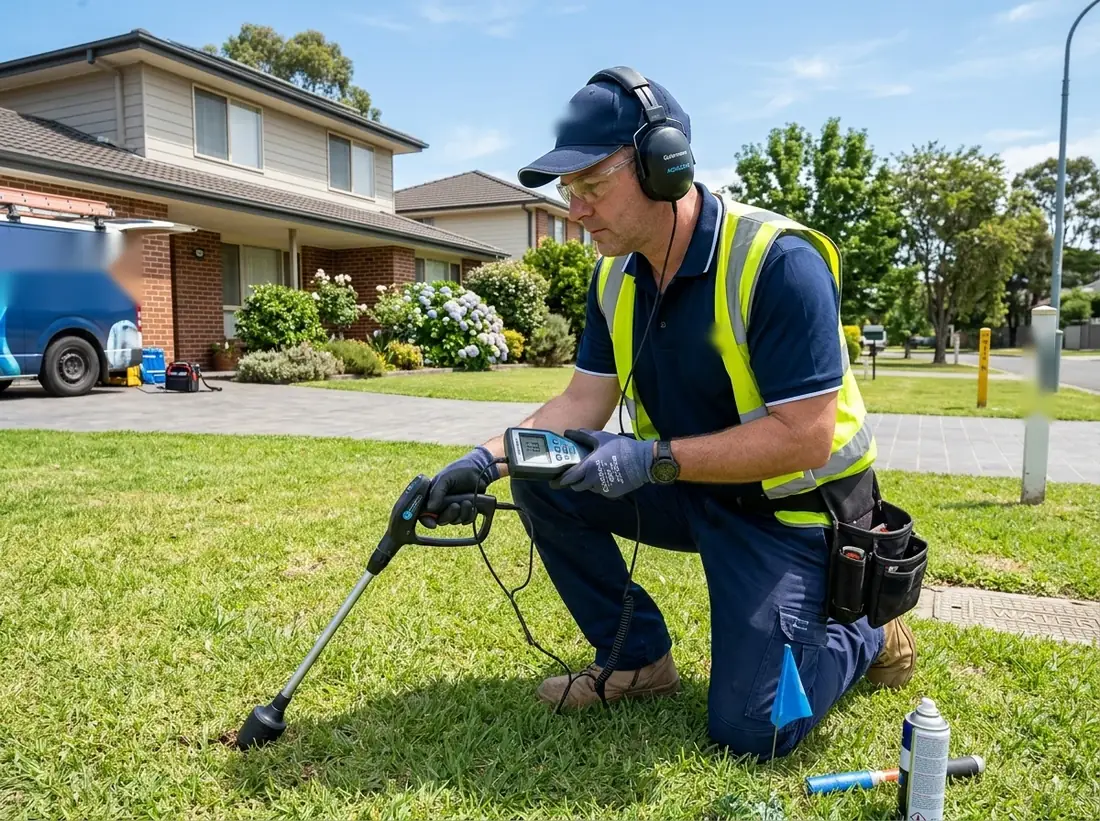
Repair usually makes sense for a single leak on a line that is otherwise in good condition. Replacement is usually the better call for galvanized steel lines, lines that have leaked more than once, or lines with low pressure from corrosion. Either way, locating the leak first keeps the digging small and tells you what condition the pipe is in.
Who is responsible for the main line?
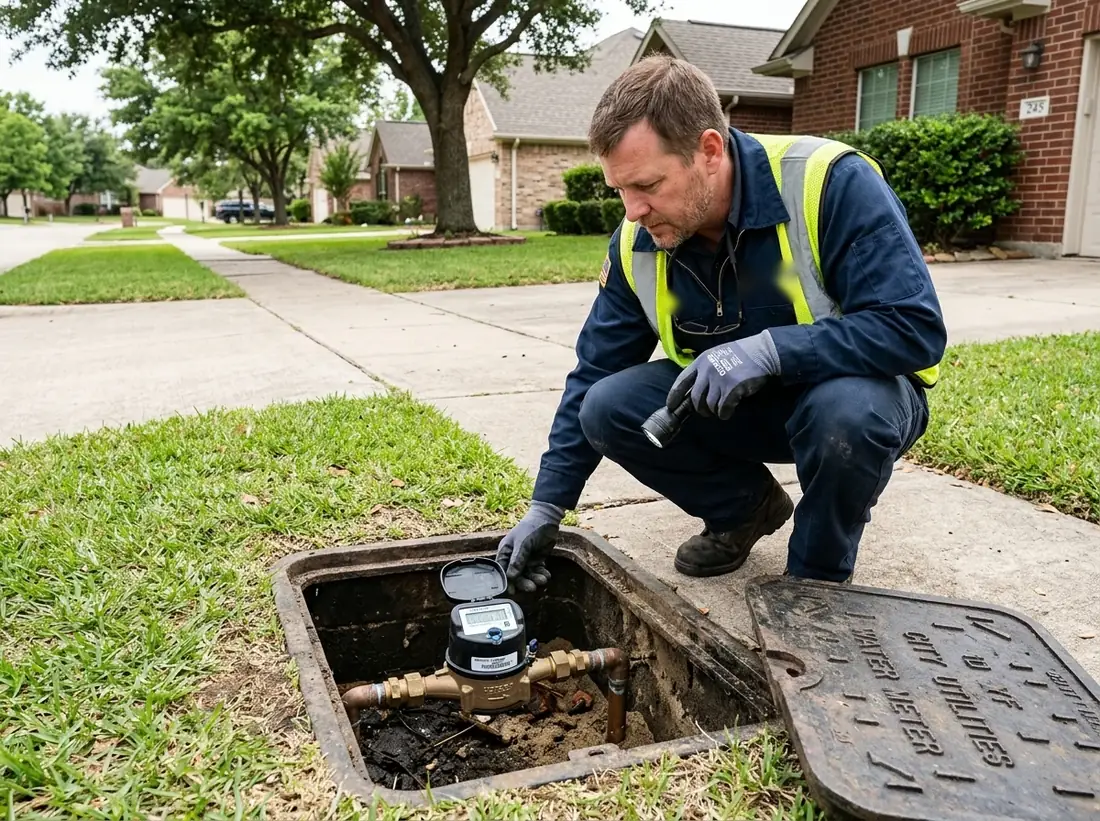
In most water systems, the utility maintains the meter and the pipe on the street side of it, and the property owner is responsible for the line from the meter to the house. Whittier-area homes are served by different providers depending on the address, including the City of Whittier and Suburban Water Systems, so check your bill to see who yours is and confirm where their responsibility ends. If water is leaking at the meter itself or on the street side, call your water provider first.
First, confirm the leak is in the main line
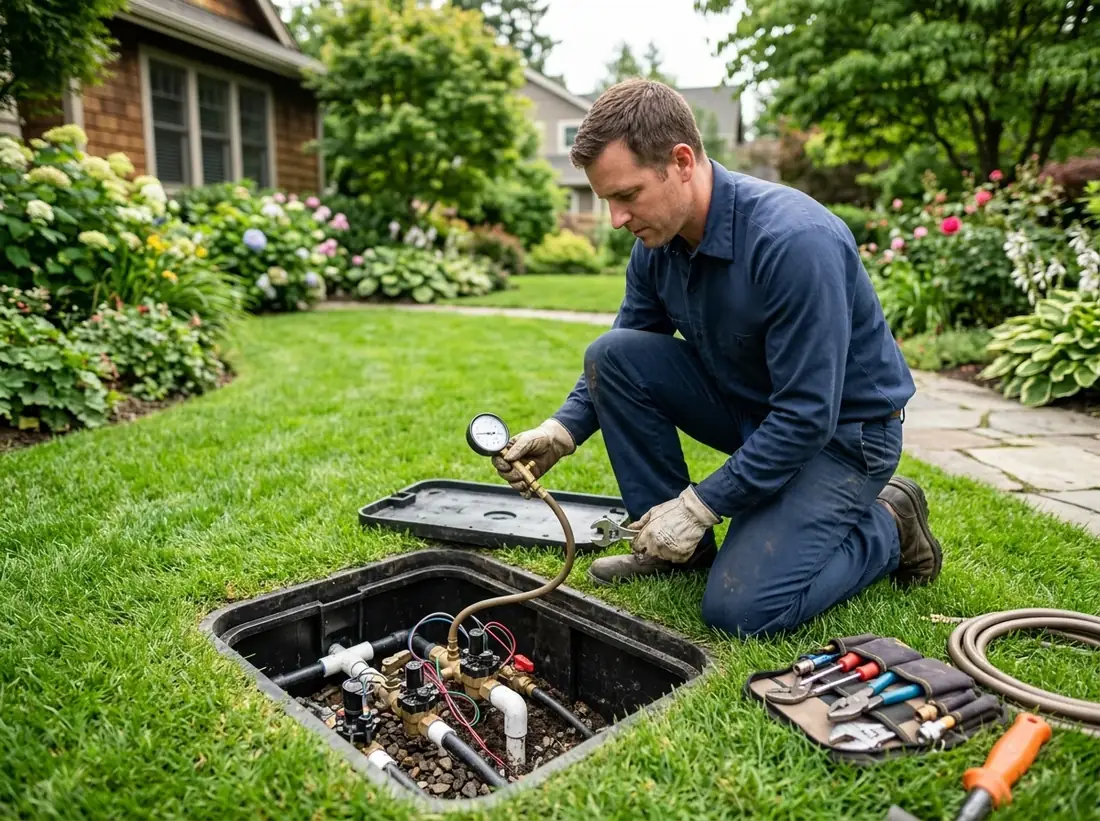
A soggy yard isn’t always the main line. Sprinkler systems often branch off the supply before it reaches the house, and an irrigation leak can look exactly the same. A simple check helps:
- Turn off all water use inside and outside, and make sure the irrigation controller is off.
- Watch the leak indicator on the meter (a small triangle or dial). If it moves, water is flowing somewhere.
- Close the main shutoff at the house. If the meter still moves, the leak is between the meter and the house valve, which may be the main line or an irrigation branch that tees off before the house.
- Close the irrigation shutoff too, if your system has one. If the meter stops now, the leak is in the sprinklers. Our guide on main line vs. irrigation leaks covers this test in more detail.
When repairing the line makes sense
- It’s the first leak on the line, and the pipe around it looks sound when exposed.
- The pipe is copper or a modern plastic in decent condition, and the leak came from a specific cause such as a root, a shifted fitting, or damage from digging.
- The leak is easy to reach, such as in a planter bed rather than under a driveway.
- Pressure is otherwise normal, which suggests the inside of the pipe isn’t badly corroded.
A repair is typically a small excavation at the pinpointed spot, a new section or coupling, and backfill. The more precisely the leak is located, the smaller the hole.
When replacing the line makes more sense
- The line is galvanized steel. Galvanized pipe corrodes from the inside, which restricts flow and lowers pressure, and fixing one leak rarely stops the next.
- It has leaked before. Repeat leaks are a sign the whole run is failing.
- The leak is under hardscape like a driveway, where a new route around it can avoid breaking concrete.
- Pressure is low throughout the house and the main line is old or undersized.
- You’re already digging for landscaping or hardscape work and the line is near the end of its life.
How pipe material affects the decision
| Material | What to know | Typical direction |
|---|---|---|
| Galvanized steel | Common in older homes; corrodes internally and loses flow over time | Usually replace |
| Copper | Long-lasting in many conditions; leaks can come from corrosion, soil, or fittings | Repair a single leak; replace if leaks repeat |
| Plastic (PE, PEX, PVC) | Common in newer installs and replacements; damage often comes from digging, roots, or fittings | Usually repairable |
Life expectancy depends on water chemistry, soil, and how the line was installed. InterNACHI’s estimated life-expectancy chart, for example, lists about 50 to 70 years for copper water lines and about 40 years for PEX. Treat those as rough guides, not deadlines.
About lead and galvanized lines: California water systems have inventoried service lines under federal lead rules. State guidance says galvanized pipe located downstream of a service line that can’t be confirmed as non-lead must be replaced, and the State Water Board reports that, as of January 2026, no service lines in California are reported as lead. You can look up your water system on the State Water Board’s service line inventory map.
How replacement is usually done
- Open trench: digging along the route and laying new pipe. Straightforward, but it disturbs lawn, plants, and hardscape.
- Trenchless methods: pulling or boring a new line between small pits at each end. Less surface damage; whether it works depends on soil, the route, and obstacles.
- New route: sometimes the best line isn’t the old one. A new path can avoid driveways, trees, and slabs.
Ask how the contractor will locate the existing line, other buried utilities, and sprinkler lines before digging. Before any digging, call 811 so the utility lines are marked.
Before you approve the work
- Verify the license on the Contractors State License Board site. California requires a license for jobs of $1,000 or more and for smaller jobs needing a permit or hired workers.
- Keep the deposit small: the CSLB advises no more than 10 percent or $1,000, whichever is less.
- Get the scope in writing: repair or replacement, pipe material, route, who pulls the permit, how the yard or concrete will be restored, and the warranty.
- Ask about a bill adjustment. After the leak is fixed, some providers offer a one-time adjustment for part of the extra water used. Keep your repair receipts.
Frequently asked questions
Can a main water line leak fix itself?
No. Pressurized water keeps escaping and often gets worse as it washes soil away around the pipe. Shut off the main if the leak is large and get it located.
Is it the water company’s job to fix the line to my house?
Usually only the street side and the meter are the provider’s responsibility. The line from the meter to the house is typically the owner’s. Check with your provider, and call them first if water is coming from the meter box or the street.
How do I know if my main line is galvanized?
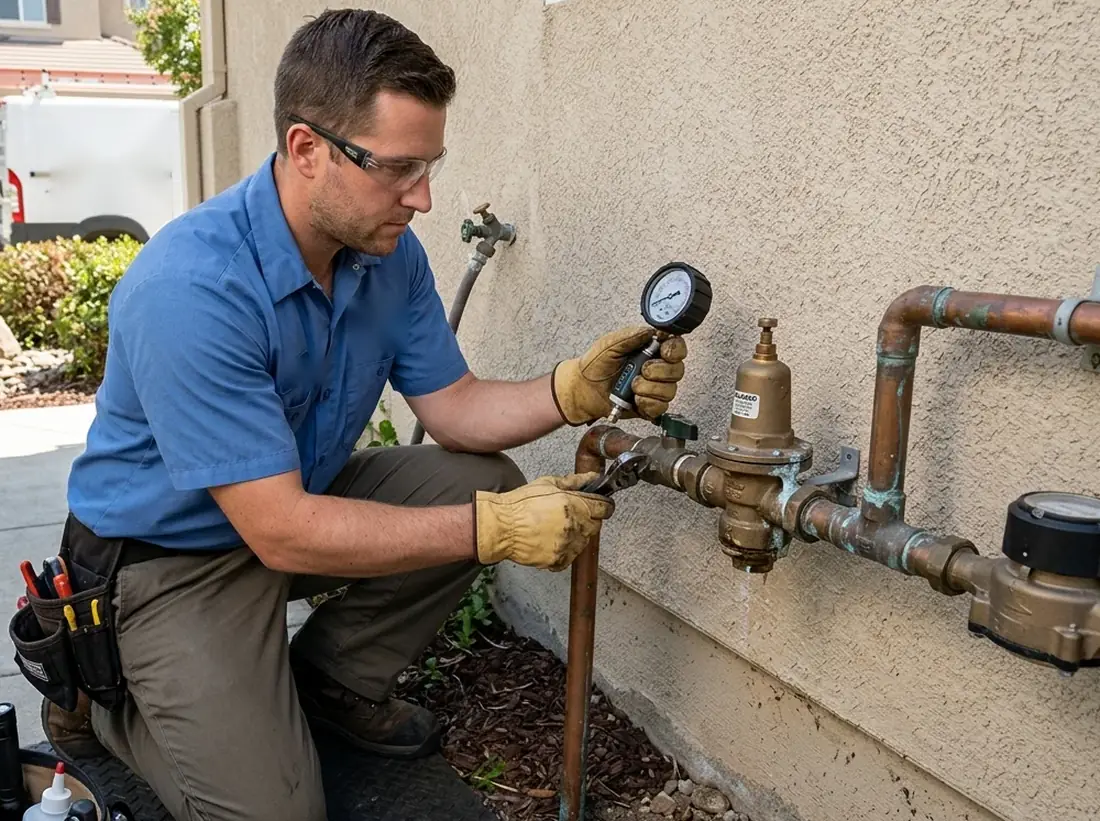
Look where the line comes up out of the ground at the house, often near the main shutoff and pressure regulator. Galvanized pipe is dull gray and threaded at the joints; copper is reddish-brown; plastic is usually white, blue, or black. If you’re unsure, a plumber can confirm.
Why find the leak first if I’m replacing the line anyway?
Finding it confirms the leak is in the main line and not irrigation or a branch line, so you don’t replace a pipe that wasn’t leaking. It also helps if you only need a repair.
Will a new main line raise my water pressure?
It can if the old line was corroded or undersized. Pressure also depends on the provider’s supply and the pressure regulator at the house, so ask the contractor to check the regulator too.
Sources
- California State Water Board: Lead Service Line Inventory FAQ
- California State Water Board: Statewide Service Line Inventory Data
- InterNACHI: Standard Estimated Life Expectancy Chart for Homes
- Contractors State License Board: Minor work exemption raised to $1,000 (AB 2622)
- Contractors State License Board: Tips for hiring a licensed contractor
- U.S. EPA WaterSense: Fix a Leak Week
Need help finding a leak?
Call to describe what you’re seeing. We’ll connect you with a Whittier leak detection pro who can pinpoint it before anything is opened up.
Call (562) 245-5818