In Southern California, the sprinkler system can be one of the biggest water users at a house, and one of the easiest places for a leak to hide. A cracked pipe under the lawn or a valve that never fully closes can waste water every day without a single visible puddle. This guide shows you how to find the leak yourself, zone by zone, using nothing more than your water meter and a walk around the yard.
Why it’s worth an hour of your time
According to the EPA, an irrigation system leak about 1/32 of an inch across, roughly the thickness of a dime, can waste around 6,300 gallons a month. A single broken sprinkler head can waste as much as 25,000 gallons over a six-month watering season.
How your sprinkler system is laid out
Knowing the parts makes the leak much easier to find:
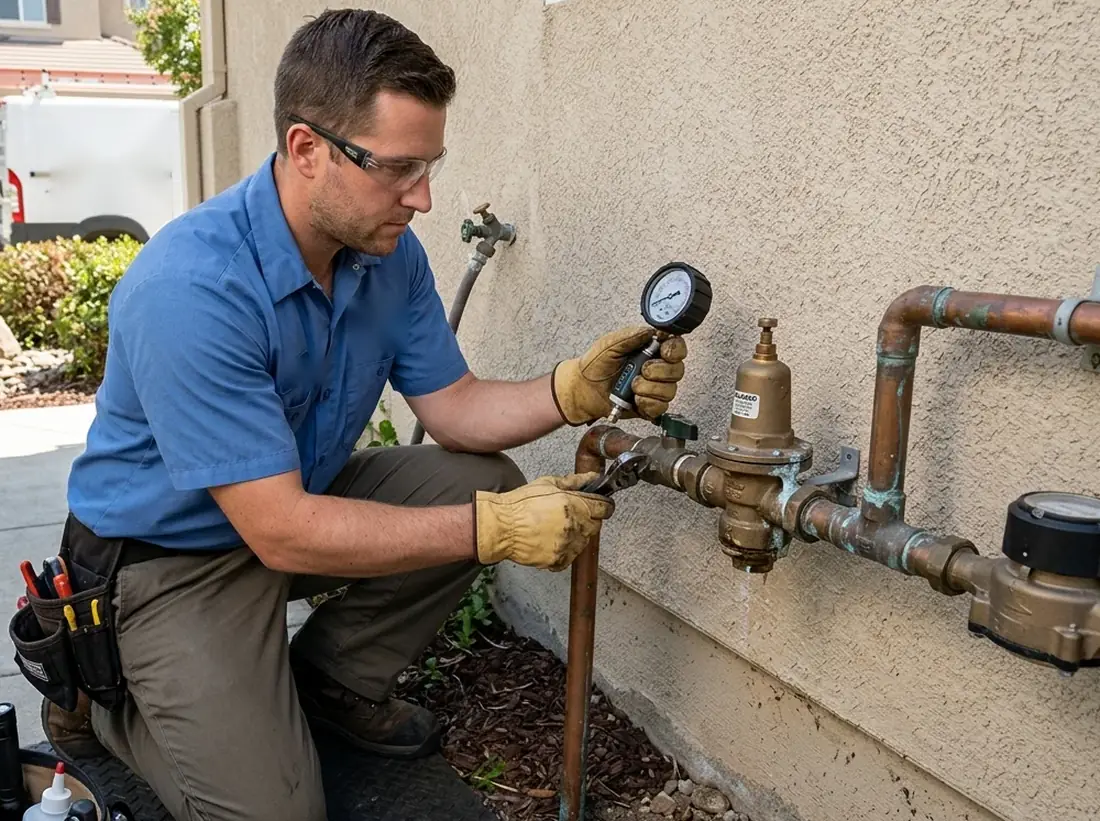
- Supply and backflow device: water for the sprinklers usually branches off the main line and passes through a backflow preventer, often a brass assembly above ground with small shutoff handles.
- Mainline: the pipe from the backflow device to the zone valves. It stays pressurized all the time, so a leak here wastes water around the clock.
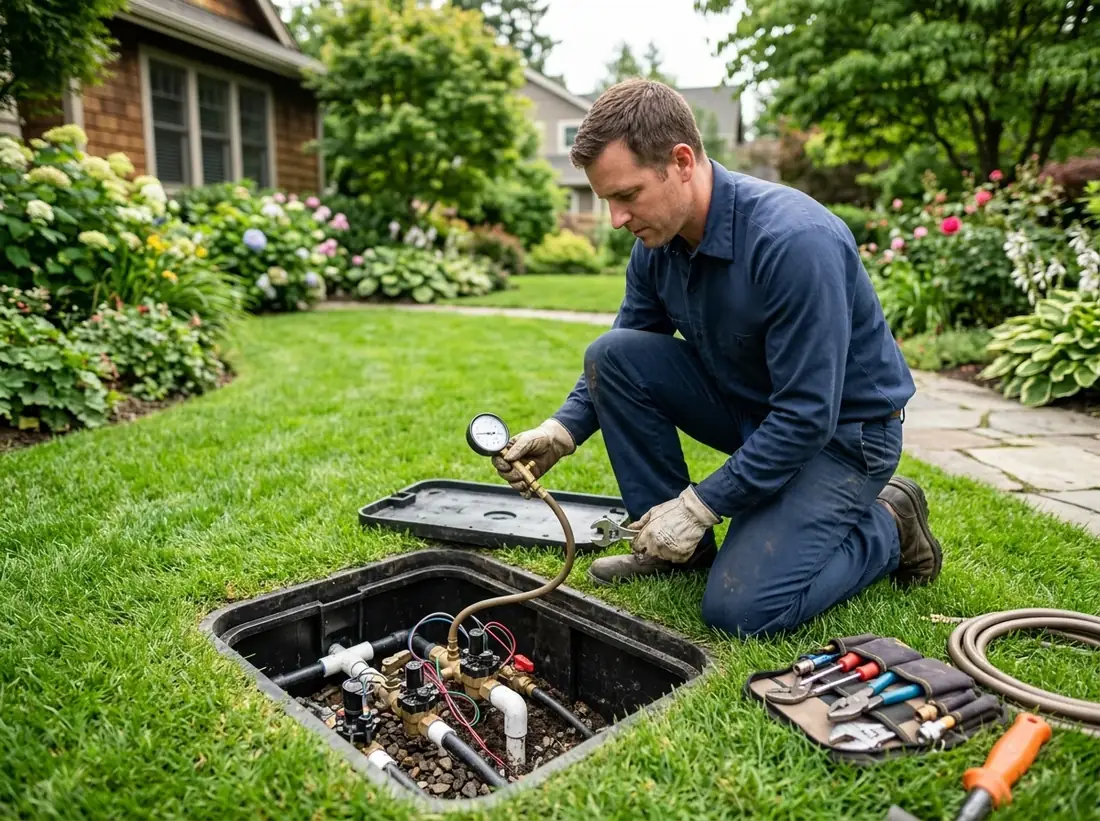
- Zone valves: grouped in a manifold or valve box. Each one opens one zone when the controller tells it to.
- Laterals and heads: the pipes from each valve to the sprinkler heads. They’re only pressurized while that zone runs, so a leak here only wastes water during watering.
- Drip lines: low-pressure tubing and emitters for beds and shrubs, usually with a pressure regulator and filter at the valve.
That difference is the key: a leak that shows on the meter when nothing is running is in the mainline or a valve; a leak that only shows while watering is in a lateral, head, or drip line.
Step 1: Run the meter test with everything off
- Turn off all water use in the house and make sure the irrigation controller isn’t running.
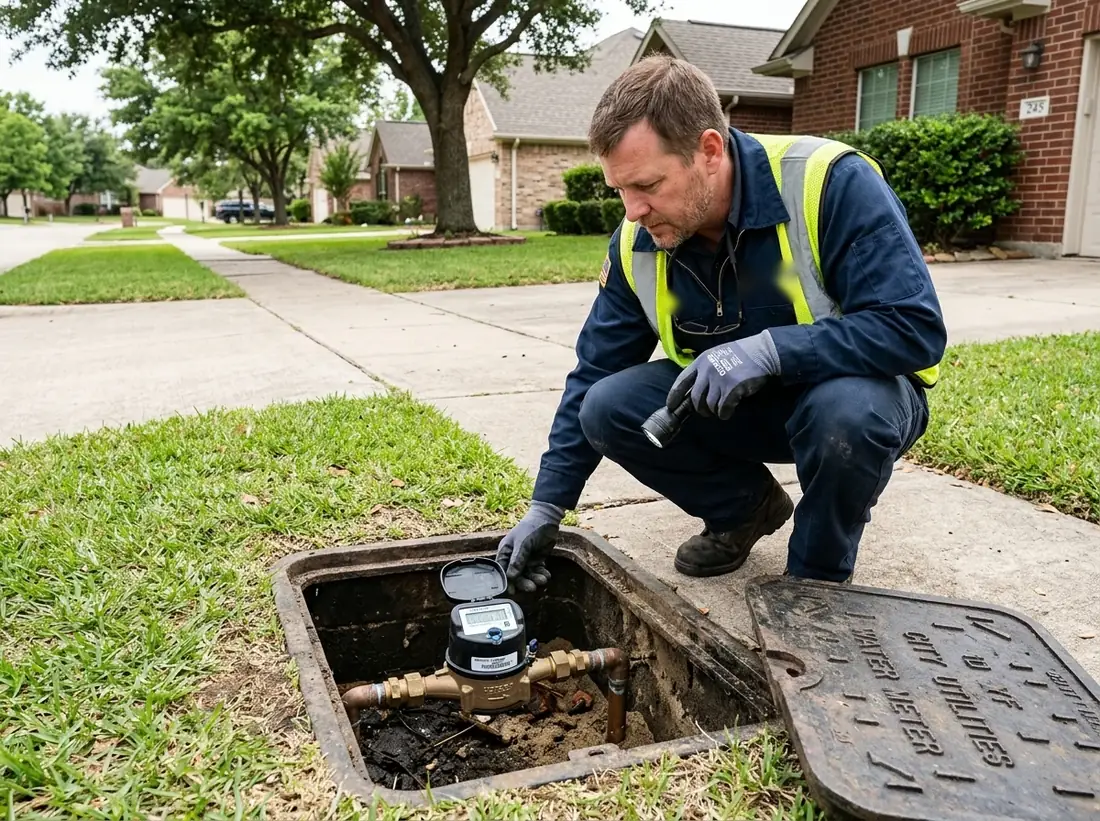
- Find the meter, usually in a box near the curb, and look at the leak indicator (a small triangle or star-shaped dial).
- If it’s turning, water is flowing somewhere. For slow leaks, write down the reading, wait two hours without using water, and check again, as the EPA recommends.
Step 2: Isolate the irrigation system
Close the shutoff for the sprinkler supply. On many systems that’s a handle on the backflow preventer; some have a separate valve in a box nearby. Then look at the meter again.
- Meter stops: the leak is in the irrigation side, most likely the mainline or a valve.
- Meter keeps moving: the leak is elsewhere, such as the main water line, a toilet, or a line under the slab. Our high water bill guide covers the indoor checks, and main line vs. irrigation leak explains the yard side.
Step 3: Walk the mainline route
With the irrigation supply back on and no zones running, walk the path between the backflow device and the valves. Look for:
- A strip of grass that is greener or softer than the rest, or that stays wet between watering days.
- Soil that is sinking, muddy, or growing moss or algae.
- Water seeping from a crack in a walkway or along the edge of the driveway.
- A hissing sound near the valve box.
Step 4: Check the valves
Open the valve box and look for water inside or around the valves. Then watch the zones after a watering cycle ends:
- A head that keeps trickling continuously long after the zone shut off usually means that zone’s valve isn’t closing fully, often from debris or a worn diaphragm.
- The lowest head on a slope draining briefly after the cycle is often just water draining out of the lateral (low-head drainage), not a valve leak. If it never stops, suspect the valve.
Step 5: Run each zone and walk it
Run one zone at a time from the controller and walk it while it runs. This is the EPA WaterSense “inspect, connect, direct” routine:
- Inspect for broken, clogged, sunken, or missing heads, and for geysers.
- Connect: check where heads meet the pipe; pooling around a head or a large wet area points to a leak at the fitting.
- Direct: make sure spray lands on plants, not on the sidewalk, driveway, or house.
- Watch for weak heads on one zone only. Low pressure in a single zone often means a cracked lateral pipe upstream of those heads.
- Misting or fogging instead of droplets can mean pressure is too high, which wastes water and stresses fittings.
Step 6: Check drip lines
Drip leaks are easy to miss because they’re low pressure. Look for emitters that gush instead of drip, tubing that has popped off a fitting, end caps that have come loose, and punctures from gophers, rakes, or edging tools. Check that the filter and pressure regulator at the drip valve are intact.
Symptom guide
| What you see | Most likely cause |
|---|---|
| Meter moves with everything off; stops when irrigation supply is closed | Mainline leak or a valve that won’t close |
| Wet spot only after watering | Lateral pipe, head fitting, or drip line |
| Weak heads on one zone | Cracked lateral pipe on that zone |
| Head trickles all the time | Leaking zone valve |
| Water in the valve box | Valve, fitting, or mainline near the manifold |
| Green strip between waterings | Mainline leak along that route |
Don’t forget the controller
The EPA’s fourth step is select: update the watering schedule with the seasons, or use a WaterSense labeled smart controller. A schedule set for August and left running in winter wastes water just like a leak. Also check your water provider’s current outdoor watering rules, which can change during drought conditions.
When to call a professional
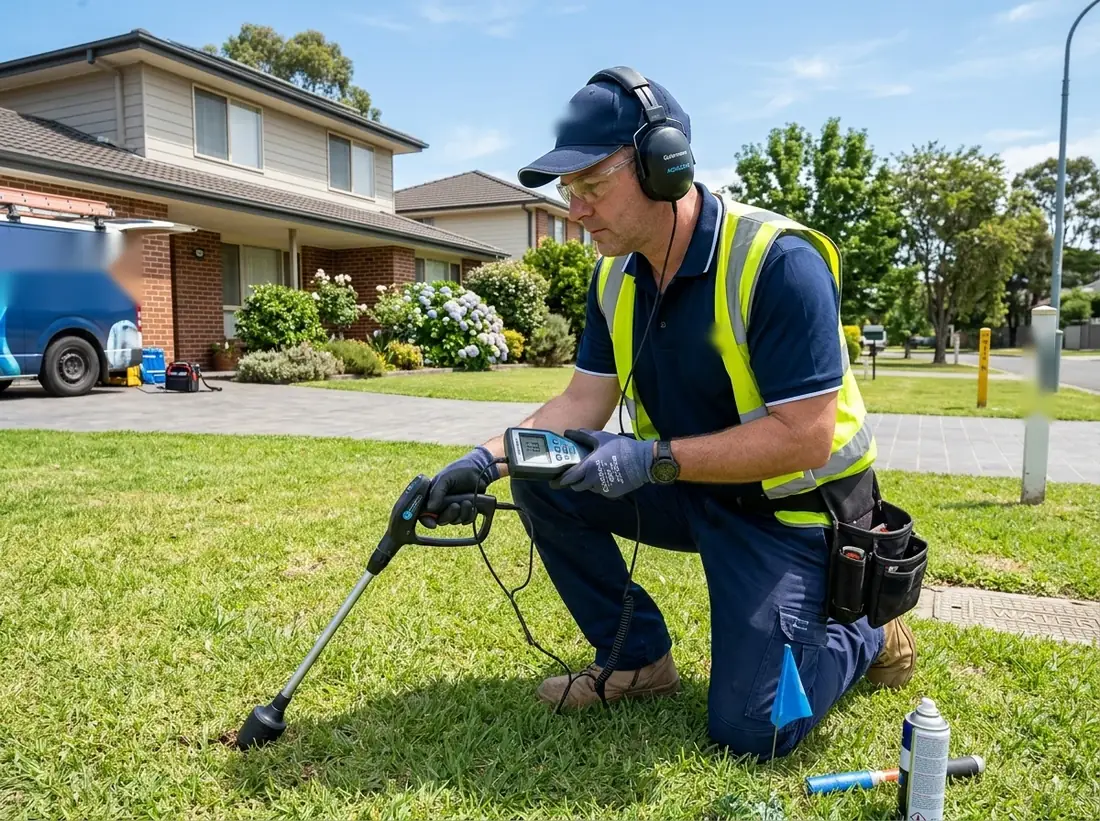
Call for irrigation leak detection if the meter shows a leak in the irrigation side but you can’t find a wet spot, the mainline runs under concrete or a deck, the leak seems to move around, or you’ve already dug once in the wrong place. A specialist can trace the pipe route and use acoustic equipment to pinpoint the leak, so the repair hole is small and in the right spot.
Frequently asked questions
How do I know if my sprinkler system has a leak?
Signs include a meter that moves when no water is in use, wet or extra-green patches between watering days, weak heads on one zone, water in the valve box, and a water bill that jumps without a change in habits.
Why does one sprinkler head keep dripping after the system shuts off?
If it drains briefly and stops, it’s usually low-head drainage from water left in the pipe. If it keeps dripping, the zone valve probably isn’t closing fully and needs cleaning or a new diaphragm.
Can a sprinkler leak raise my water bill even if I can’t see water?
Yes. Mainline leaks underground can soak into the soil without surfacing, and a valve that doesn’t fully close can drain water through the lowest head out of sight.
Should I turn off my sprinklers if I suspect a leak?
If the meter test points to the irrigation side, closing the irrigation shutoff stops the waste until it’s fixed. The house will still have water.
Is a sprinkler leak the same as a main line leak?
No. The main line feeds the house; the irrigation system usually branches off it. Closing the irrigation shutoff and watching the meter tells you which one is leaking.
Sources
Need help finding a leak?
Call to describe what you’re seeing. We’ll connect you with a Whittier leak detection pro who can pinpoint it before anything is opened up.
Call (562) 245-5818