Once a slab leak is confirmed, the next question is how to fix it. There are four common approaches, and the right one depends less on preference than on facts: where the leak is, which line it’s on, what the pipe is made of, and whether this is the first leak or the third. This guide walks through each option in plain English so you can follow the conversation with your contractor and ask the right questions before anyone picks up a jackhammer.
Quick answer
- Spot repair opens the floor at the leak and fixes that section. Best for a single leak in otherwise sound pipe.
- Reroute abandons the leaking run under the slab and runs new pipe through walls or the attic. Best when the floor is costly to open or the line has leaked before.
- Epoxy lining coats the inside of existing pipe. Can suit some systems; ask what certifications and written warranty come with it.
- Repipe replaces most or all supply lines. Worth considering after repeated leaks or with aging pipe throughout.
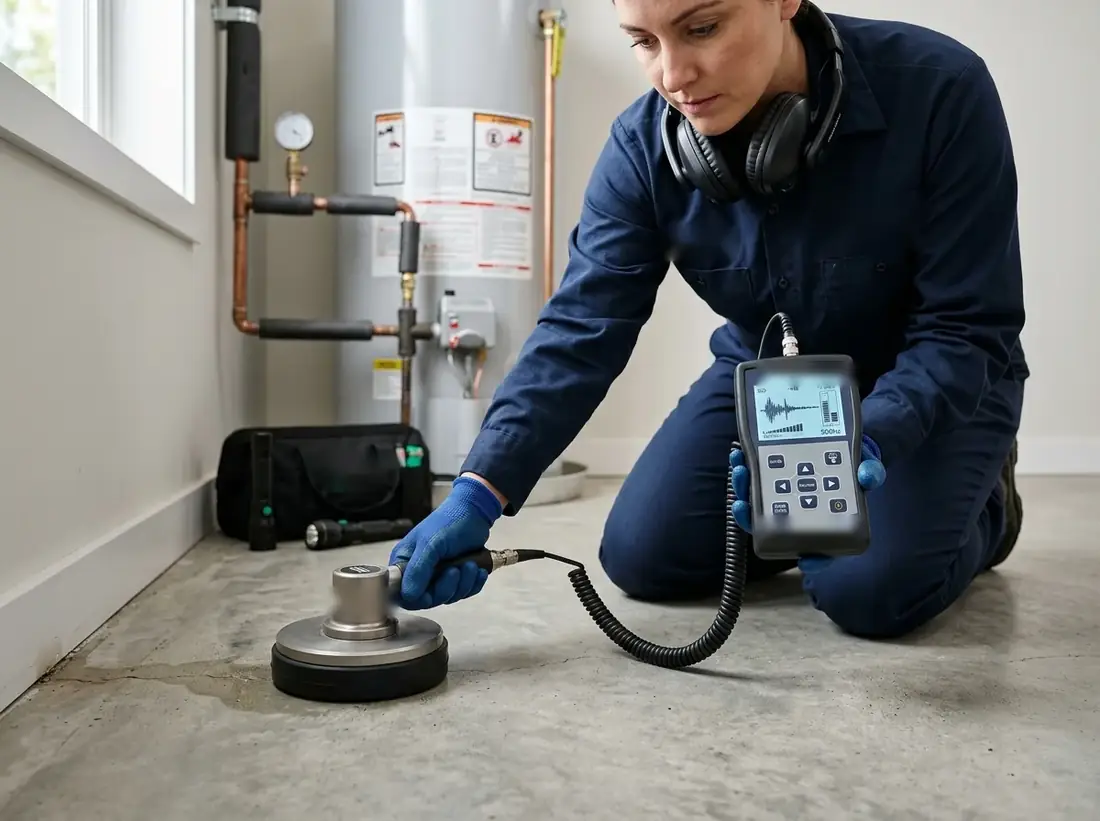
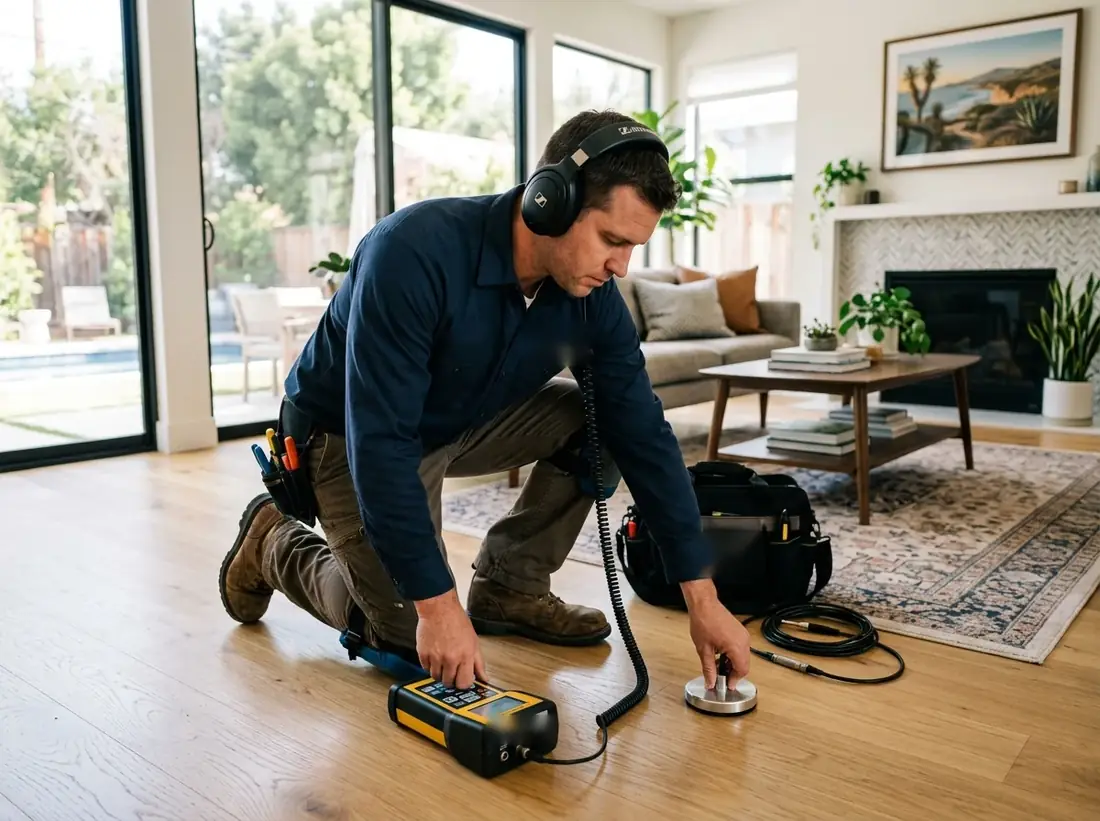
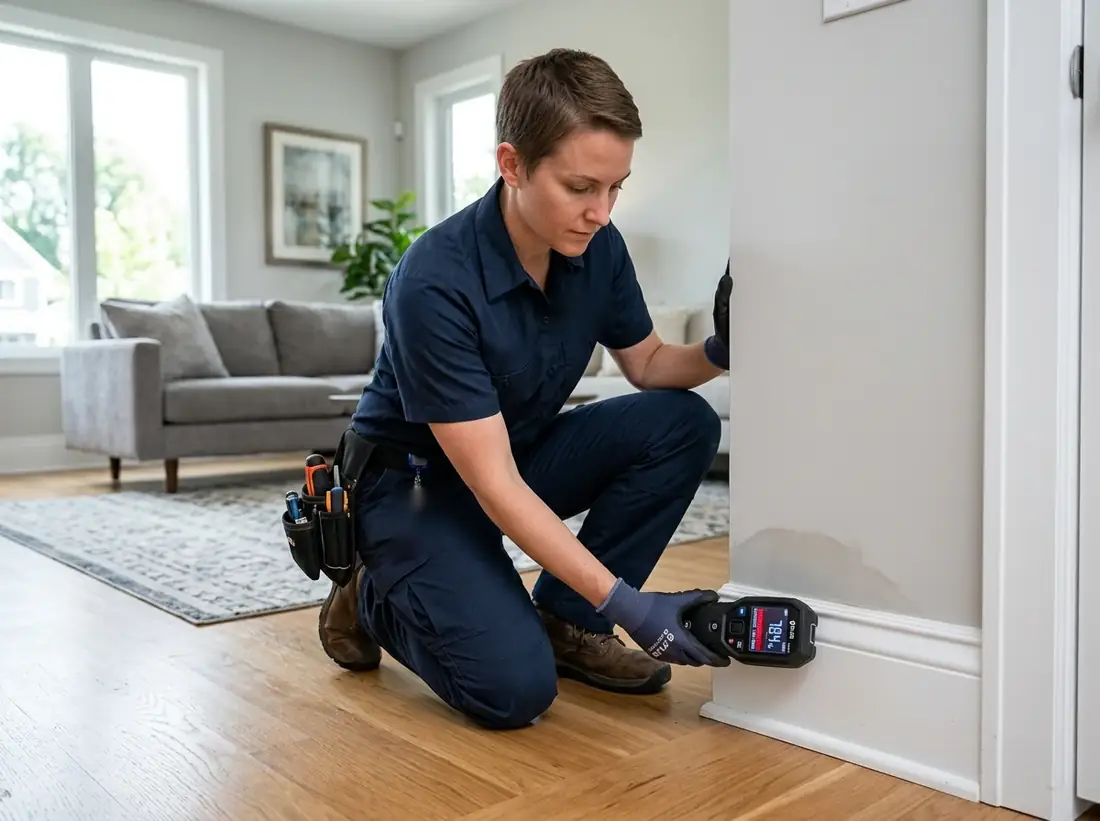
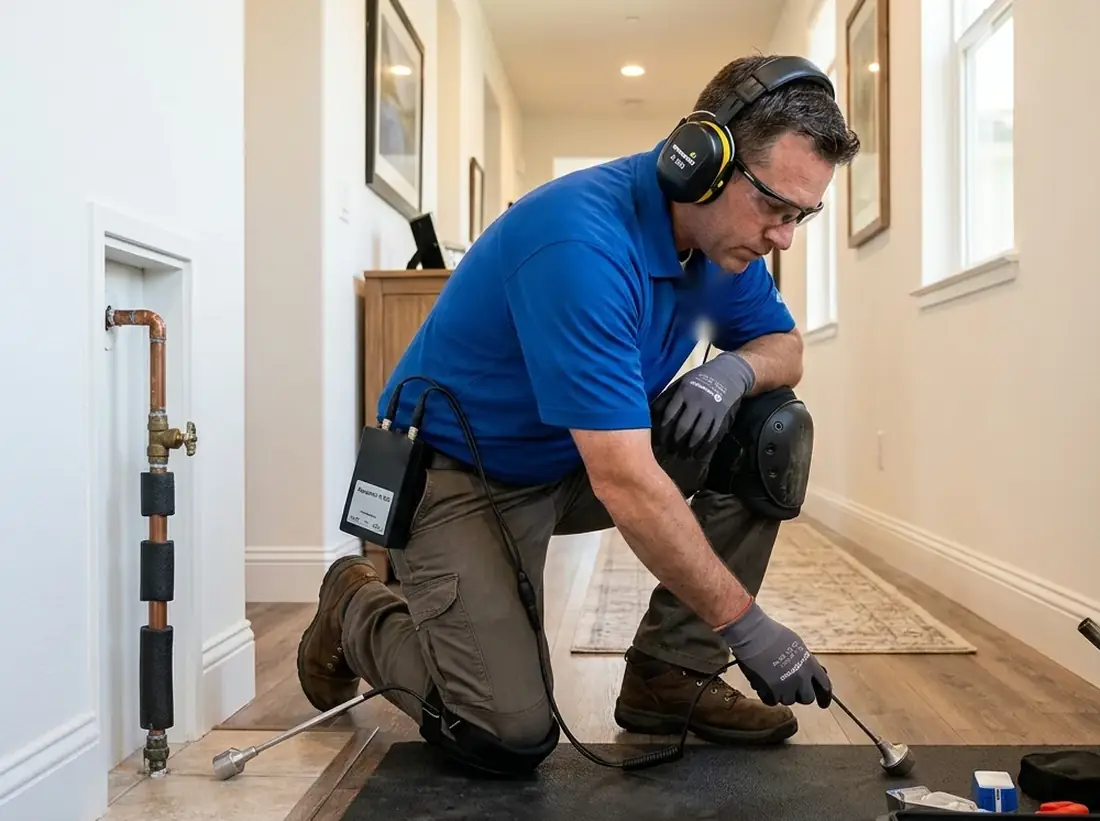
All four start the same way: with the leak located precisely and the affected line identified.
Why the leak detection report decides the repair
Two homes with “a slab leak” can need completely different repairs. Before you compare options, make sure your leak detection findings answer these questions:
- Which line is leaking? Hot or cold supply, and which branch. A hot-water leak often shows up as a warm spot on the floor; a cold-water leak usually doesn’t.
- Where exactly is it? Under a hallway with vinyl plank is a very different job from under a kitchen island or a bathroom with tile you can’t match.
- What is the pipe, and what condition is it in? Many slab homes have copper under the floor. Corrosion or thinning along the run matters more than the single pinhole.
- Is this the first leak? A second or third leak on the same system changes the math toward rerouting or repiping.
If the leak hasn’t been pinpointed yet, start there. Opening a slab on a guess is the most expensive way to fix a leak. Our slab leak warning signs guide covers what to look for, and a slab leak detection visit narrows it down to a spot.
Option 1: Spot repair through the slab
A spot repair (also called direct access) means cutting a small opening in the flooring and concrete right over the leak, excavating to the pipe, replacing the damaged section, and then backfilling and patching the concrete. The flooring is restored afterward.
When it makes sense: a single leak, pinpointed accurately, on pipe that is otherwise in good shape, under flooring that is reasonable to patch.
Trade-offs:
- It fixes one spot. If the rest of the run is thinning, another leak can show up elsewhere later.
- The flooring repair is often the bigger cost and hassle, especially with tile or hardwood that’s hard to match.
- Concrete work brings dust and noise, and the area needs to cure before flooring goes back down.
Accurate detection is what makes spot repair work. The tighter the location, the smaller the opening.
Option 2: Reroute (bypass) the line
A reroute leaves the leaking pipe in the slab, disconnects it, and runs a new line to the same fixtures through walls, the attic, or along the outside of the house. Many reroutes use PEX tubing, which is flexible and can be pulled through walls with fewer openings; copper is also used.
When it makes sense: the leak is under flooring you don’t want opened, the line has leaked before, the run under the slab is long, or the leak is under something hard to move like cabinets or a kitchen island.
Trade-offs:
- Drywall openings to patch and paint, usually several small ones rather than one large hole in the floor.
- Lines in the attic should be properly supported and insulated. Ask how the new line will be protected from summer attic heat and from damage during future attic work.
- The old line stays in the slab, abandoned and capped. That’s normal, but make sure it’s actually disconnected from the system.
Option 3: Epoxy pipe lining
Epoxy lining (sometimes called pipe restoration) cleans the inside of the existing pipes and coats them with an epoxy barrier, sealing small leaks and protecting the pipe wall. Access is usually through existing connection points, so walls and floors stay mostly intact.
When it makes sense: some systems with pinhole leaks or interior corrosion, where the pipes are still structurally sound and opening floors or walls would be especially disruptive.
Questions to ask before choosing it:
- Is the coating certified for drinking water? Look for certification to NSF/ANSI/CAN 61, the standard for materials that come into contact with drinking water, including coatings.
- Is my pipe a good candidate? Badly damaged, split, or crushed pipe can’t be fixed by coating it.
- What does the written warranty cover, for how long, and who stands behind it?
- Does the job need a permit or inspection where you live?
Option 4: Repipe the house
Repiping replaces most or all of the home’s water supply lines, typically rerouted overhead through walls and the attic instead of under the slab. It is the biggest project of the four, but it addresses the whole system rather than one leak.
When it makes sense: repeated slab leaks, widespread corrosion, low pressure from aging pipe, or a remodel that already has walls open. Homeowners in older Whittier neighborhoods with original plumbing often weigh this option; our guide to hidden leaks in older homes explains why.
Side-by-side comparison
| Option | Best when | What gets opened | Watch out for |
|---|---|---|---|
| Spot repair | One leak, sound pipe, floor easy to patch | Floor and slab over the leak | Flooring match; future leaks elsewhere on the run |
| Reroute | Repeat leaks, costly flooring, long runs | Small drywall openings | Attic protection; old line properly capped |
| Epoxy lining | Pinholes or corrosion in structurally sound pipe | Mostly connection points | Drinking-water certification; warranty terms |
| Repipe | Multiple leaks or aging pipe throughout | Walls and ceilings along new routes | Scope, schedule, and patching in writing |
How insurance fits in
Insurance can affect which option is cheapest for you. Many California homeowners policies help pay to access and restore what had to be opened, plus sudden water damage, but not to repair the pipe itself. That can shift the comparison between a spot repair and a reroute. Talk to your insurer before work starts, and read our guide to slab leaks and homeowners insurance in California.
Permits, licenses, and paperwork
- Check the license. In California, a contractor’s license is required for jobs of $1,000 or more in labor and materials, and for smaller jobs that need a building permit or hired workers. Look up any license number on the Contractors State License Board (CSLB) website.
- Limit the deposit. The CSLB advises not paying more than 10 percent down or $1,000, whichever is less.
- Get it in writing: the repair method, which lines are included, how openings will be patched, who pulls any permit, the timeline, and the warranty.
- Compare like with like. A spot repair quote and a reroute quote aren’t the same job; ask each contractor what happens to the rest of the line.
After the repair
Confirm the fix with the same test that may have revealed the leak: turn off every fixture and watch the leak indicator on your water meter. It should stay still. Dry any wet materials quickly (the EPA advises drying within 24 to 48 hours to help prevent mold), keep photos and receipts, and ask your water provider whether a leak adjustment is available on your bill.
Frequently asked questions
Is rerouting better than fixing a slab leak directly?
Neither is always better. A spot repair is often simplest for a single, accurately located leak in sound pipe. Rerouting tends to win when the line has leaked before, the run under the slab is long, or opening the floor would mean expensive flooring work.
Can I keep using water until the slab leak is fixed?
Often, if the leak is small and you shut it down when you can. If the leak is on the hot side, closing the cold supply valve on top of the water heater stops the flow to the hot lines. Leaving a leak running adds to your bill and soaks the soil under the slab, so plan the repair promptly.
Is epoxy pipe lining safe for drinking water?
Ask for proof that the specific product is certified to NSF/ANSI/CAN 61, the standard covering materials, including coatings, that contact drinking water, and get the warranty terms in writing.
Do I need leak detection before choosing a repair?
Yes. Every repair option depends on knowing which line is leaking and where. Without that, a contractor may open the wrong spot or recommend more work than needed.
Will my homeowners insurance pay for the repair?
Policies often help with access, restoration, and sudden water damage, but usually not the pipe repair itself. Coverage varies, so check your policy and call your insurer before work starts.
Sources
Need help finding a leak?
Call to describe what you’re seeing. We’ll connect you with a Whittier leak detection pro who can pinpoint it before anything is opened up.
Call (562) 245-5818